

What Is Known About Renee Nicole Good Death | Minneapolis ICE Shooting

On January 7, 2026, a 37-year-old U.S. citizen was fatally shot by a United States Immigration and Customs Enforcement (ICE) agent in Minneapolis, Minnesota. The killing of Renee Nicole Good has prompted national debate, conflicting official accounts, and renewed scrutiny of federal use-of-force policies. This article, published by The London Magazine, presents a factual examination of the incident, its institutional context, and the status of the ongoing investigation.
Who Was Renee Nicole Good?
Renee Nicole Good was a 37-year-old United States citizen. She was a poet and writer from Colorado Springs, Colorado, who lived in Minneapolis–Saint Paul with her life partner and six-year-old child.
Good previously studied creative writing at Old Dominion University, where in 2020 she won the university’s Academy of American Poets Prize for her poem “On Learning to Dissect Fetal Pigs”. Her mother, Donna Ganger, described her to reporters as compassionate and caring. Good had previously been married to Timmy Ray Macklin Jr., who died in 2023 at age 36. According to court records, Good had three children in total.
Good was also known by her full legal name, Renee Nicole Macklin Good, following a 2023 name change that incorporated her previous married surname as a middle name while adopting “Good” to share with her current partner.
Read More: Who Is Rebecca Lucy Taylor?
Understanding ICE and Federal Immigration Enforcement
For readers unfamiliar with U.S. immigration enforcement structures, understanding what ICE is and what ICE agents are authorized to do is essential context for this incident.
What Is ICE?
The United States Immigration and Customs Enforcement (ICE) is a federal law enforcement agency under the United States Department of Homeland Security. Its stated mission is to conduct criminal investigations, enforce immigration laws, preserve national security, and protect public safety.
ICE was created as part of the Homeland Security Act of 2002, following the September 11 attacks. It absorbed the prior functions of the Immigration and Naturalization Service and the United States Customs Service.
Who Are ICE Agents and Officers?
ICE has two primary operational divisions, each with distinct personnel:
- Homeland Security Investigations (HSI): employs special agents who are criminal investigators. HSI special agents are Series 1811 criminal investigators and have the statutory authority to enforce the Immigration and Nationality Act (Title 8), U.S. customs laws (Title 19), general federal crimes (Title 18), and the Controlled Substances Act (Title 21).
- Enforcement and Removal Operations (ERO): employs deportation officers. ERO manages all aspects of the immigration enforcement process, including the identification, arrest, detention, and removal of aliens who are subject to removal or are unlawfully present in the U.S.
The officer who shot Renee Good, identified as Jonathan Ross, was a deportation officer working for ERO, based out of the St. Paul field office.
What Are ICE Agents Authorized to Do?
ICE agents and officers have broad enforcement authority within the United States. Unlike U.S. Customs and Border Protection, which operates primarily at borders and ports of entry, ICE personnel do not patrol American borders; rather, that role is performed by U.S. Customs and Border Protection. Instead, ICE conducts interior enforcement operations throughout the country.
ICE officers can arrest individuals believed to violate immigration law, execute search warrants, and conduct targeted enforcement operations. However, they operate under constitutional constraints and departmental policies regarding the use of force.
The Minneapolis Operation | Why Were ICE Agents There?
Understanding why federal agents were operating in Minneapolis in such large numbers requires context about the recent Trump administration immigration policy and specific operations in Minnesota.
The Largest Immigration Operation Ever
The Trump administration launched what officials describe as the largest federal immigration enforcement operation ever carried out, preparing to deploy as many as 2,000 federal agents and officers to the Minneapolis area. The Department of Homeland Security announced this operation on January 6, 2026, one day before the shooting.
The Department of Homeland Security (DHS) announced what it called the largest immigration enforcement operation ever carried out, sending 2,000 agents to the Minneapolis–Saint Paul metropolitan area. The operation was scheduled as a 30-day surge in the Twin Cities area.
Background to the Minneapolis Focus
The Trump administration has focused intensely on Minnesota’s Somali community. President Trump has regularly cited Somalia — often in incendiary terms — to justify his mass deportation campaign. Last month, Mr. Trump called people from Somalia “garbage” and said they “contribute nothing”.
The deployment was also connected to federal scrutiny of alleged fraud involving federally funded programs in Minnesota, including child care assistance programs. However, state officials conducting investigations reported that accused centers were operating normally.
Before the January 6 announcement, ICE had already been conducting operations in the Twin Cities under an initiative called Operation Metro Surge, which began in late 2024.
The Shooting | What Happened on January 7, 2026
Timeline of Events
The shooting occurred at approximately 9:30 a.m. on January 7, 2026, on Portland Avenue between East 33rd and 34th Streets in the Central neighborhood of south Minneapolis. This location is approximately two kilometres from George Floyd Square, where George Floyd was killed by police officer Derek Chauvin on May 25, 2020.
According to witnesses, four ICE agents from two vehicles approached a maroon Honda Pilot that was blocking one lane of the avenue.
Witness Accounts
Multiple witnesses provided accounts of the incident. Witnesses told FOX 9, a woman got into a red vehicle, and there was one ICE agent on either side of the vehicle trying to get in, and a third ICE agent came and tried to yank on the driver’s side door.
In one video, a gray pickup truck is seen pulling up to a burgundy SUV stopped perpendicular to the truck as someone shouts, “Get the f— out of our neighborhood.” Agents get out of the truck, and one walks up to the SUV and yanks on the driver’s door handle, ordering the driver to get out.
Video footage shows the sequence of events: the SUV reversed briefly, then began moving forward. Another agent is standing near the front of the SUV as it pulls forward. The agent appears to draw his firearm, and as the SUV drives forward in his direction, he moves backward, shooting into the SUV as it drives off. Three shots were fired. The vehicle then crashed into parked cars.
Police Response
Minneapolis Police Department chief Brian O’Hara said officers responded to a report Wednesday morning of shots being fired in an incident involving federal law enforcement. The city’s officers found a woman with a gunshot wound to the head who was later pronounced dead at a local hospital.
The Shooter: Jonathan Ross
The ICE officer who shot Good has been identified as Jonathan Ross, a 43-year-old deportation officer. The Minnesota Star Tribune identified the ICE agent and reported that on June 17, 2025, the same agent had been hit and dragged more than 100 yards by a vehicle driven by Roberto Carlos Munoz-Guatemala, who was subsequently convicted of assaulting a federal officer.
Conflicting Official Accounts
The shooting has generated starkly different narratives from federal and local authorities.
Federal Government Position
Secretary of Homeland Security Kristi Noem traveled to Minneapolis on the evening of January 7 to address the incident. Homeland Security Secretary Kristi Noem described Wednesday’s episode as an “act of domestic terrorism” and said the agent acted in self-defense and to protect fellow officers.
She alleged the woman who was killed was using her vehicle to block officers, had been harassing them throughout the day, and “attempted to run a law enforcement officer over” before she was shot.
DHS spokesperson Tricia McLaughlin stated that Good “weaponized her vehicle, attempting to run over our law enforcement officers in an attempt to kill them — an act of domestic terrorism.”
Vice President JD Vance defended the shooting, stating that the incident was “a tragedy of her own making.”
State and Local Officials’ Response
Minneapolis Mayor Jacob Frey directly contradicted the federal account. Minneapolis mayor Jacob Frey noted that the video footage of the incident did not appear to suggest this, stating, “Having seen the video myself, I want to tell everybody directly that is bullshit”. He added that ICE should leave Minneapolis.
Minnesota Governor Tim Walz urged residents not to believe what he described as a “propaganda machine” and asked for protests to remain peaceful. Gov. Tim Walz said he’s pessimistic that a “fair outcome” will come from a federal probe of Good’s slaying with local authorities ousted from the investigation.
The Minneapolis City Council issued a statement describing Good as “a resident of our city who was out caring for her neighbors this morning” when she was killed by the federal government.
Federal Use-of-Force Standards and Legal Context
Understanding whether the shooting was legally justified requires examining federal use-of-force policies.
DHS and DOJ Use-of-Force Policies
Federal law enforcement officers operate under similar guidance. The Department of Justice says in its Justice Manual that firearms should not be used simply to disable a moving vehicle.
The policy allows deadly force only in limited circumstances, such as when someone in the vehicle is threatening another person with deadly force, or when the vehicle itself is being used in a way that poses an imminent risk and no reasonable alternative exists, including moving out of the vehicle’s path.
According to the policy, deadly force cannot be used to stop someone who is fleeing, though it is authorized when an officer believes that someone who’s trying to escape poses a serious threat to the officer or others.
The policy explicitly states that moving out of the vehicle’s path should be considered a reasonable defensive option.
Constitutional Standards
Under the Fourth Amendment, courts evaluate police use of force, whether by city officers, state troopers, or federal agents, under an “objective reasonableness” test. This standard asks whether a reasonable officer in the same circumstances would have believed the force was necessary.
“Weaponizing a Vehicle” Under U.S. Law
Courts have found that being struck by a vehicle — or facing an oncoming vehicle — can present a deadly force threat, depending on the circumstances. However, the determination depends on specific factors, including the speed and size of the vehicle, as well as whether the officer had reasonable alternatives to using deadly force.
Use-of-force experts noted questions about the officer’s positioning. A former ICE official pointed out it appears the agent who fired was recording or photographing the driver with a cell phone in his left hand while drawing his weapon, raising questions about tactical positioning.
The Investigation and Accountability
Initial Investigation Plans
Initially, it was understood that the FBI and the Minnesota Bureau of Criminal Apprehension (BCA) would conduct a joint investigation into the shooting.
Federal Reversal
On January 8, the head of the Minnesota Bureau of Criminal Apprehension said that the FBI had revoked its access to evidence of the shooting, reversing an earlier agreement that a joint investigation would be undertaken by the BCA and the FBI.
The Minnesota Bureau of Criminal Apprehension will not be part of the probe into an ICE agent’s slaying of 37-year-old Renee Nicole Good, officials said Thursday. Instead, the FBI will be solely responsible for the investigation.
Implications for State Prosecution
Minnesota’s Public Safety Commissioner indicated that without cooperation from federal authorities and access to evidence, it would be extremely difficult, if not impossible for state investigators to build a case.
Federal law enforcement officers have broad legal protections when acting in the course of their official duties, and the Justice Department has taken a hard line against state efforts to arrest or prosecute federal agents.
Who Is Investigating?
The FBI is now the sole investigative authority. The investigation is ongoing, and no charges have been filed. Federal officials have made no commitments regarding timelines or potential outcomes.
Public and Political Response
Protests and Community Reaction
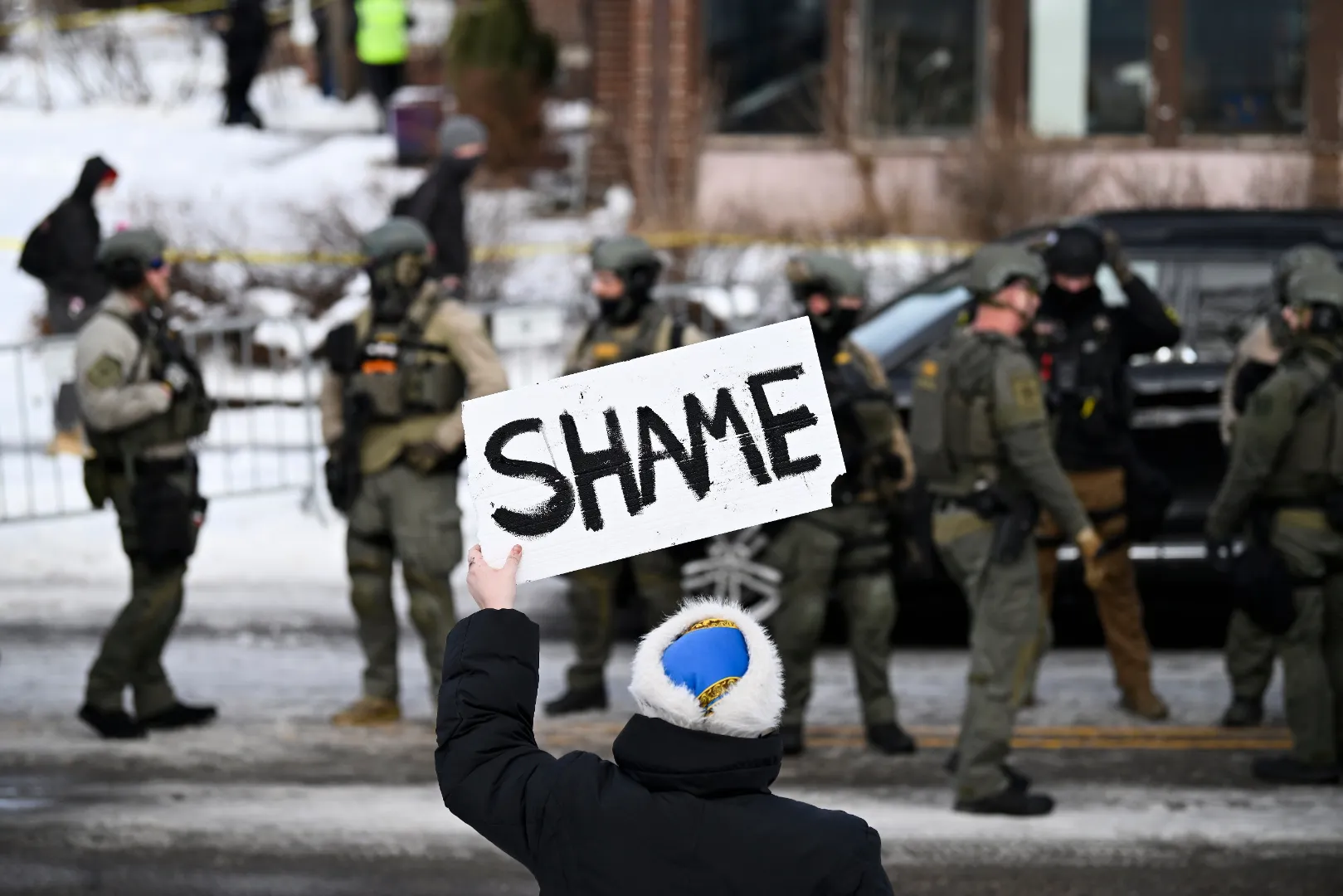
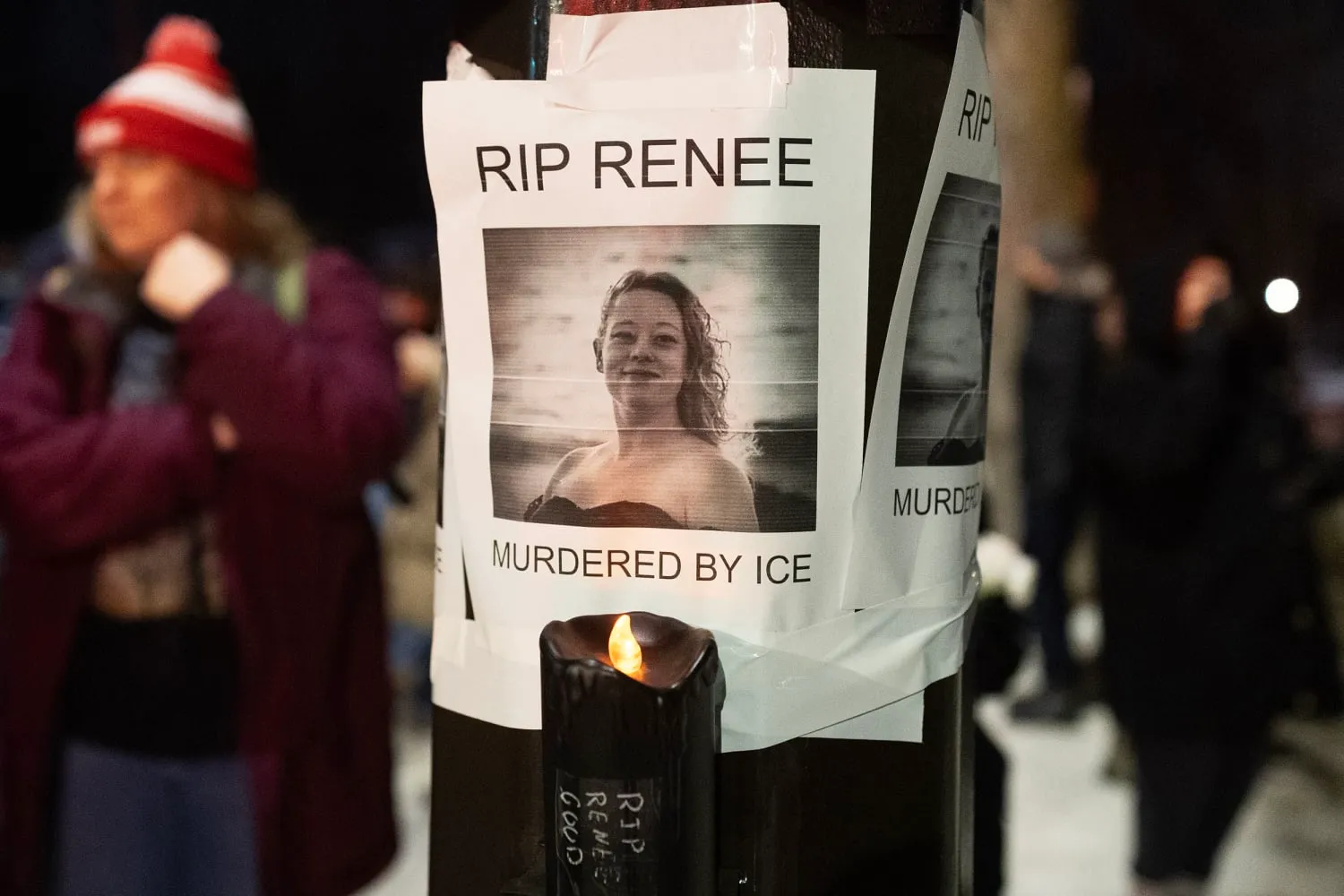
The killing drew a crowd of hundreds of protestors to the location. A memorial quickly grew at the intersection where Good was shot, with flowers, candles, and signs.
Protests continued into the following day outside the Whipple Federal Building in Minneapolis, which houses ICE’s regional headquarters. Some protesters were met with pepper spray and tear gas from federal agents.
School Closures
Minneapolis Public Schools cancelled class for the remainder of the week, citing “incidents around the city” that apparently referred to both the shooting of Good and, in a subsequent scene, ICE’s use of pepper spray and pepper balls against students at Roosevelt High School.
Geographic Context | Proximity to George Floyd Square
The shooting occurred in the same south Minneapolis neighborhood where George Floyd was killed by police officer Derek Chauvin in May 2020. George Floyd Square is at the intersection of Chicago Avenue and East 38th Street, approximately four blocks from where Renee Good was shot.
The proximity to George Floyd Square has added emotional resonance for Minneapolis residents, though the two incidents involve different law enforcement agencies and different legal frameworks. George Floyd’s killing by a Minneapolis police officer sparked nationwide protests and led to Chauvin’s conviction for murder. The current incident involves federal agents operating under federal authority.
What Remains Unknown
Several critical questions remain unanswered:
- What specific operation was ICE conducting in that neighborhood on January 7?
- Was Renee Nicole Good the target of any enforcement action, or was she a bystander?
- What commands, if any, were given to Good before the shooting?
- What happened in the moments immediately before the video footage begins?
- Will the FBI investigation result in any charges against the ICE agent?
- What disciplinary or administrative actions, if any, will ICE take?
Conclusion
The death of Renee Nicole Good during an ICE operation in Minneapolis has intensified debate over federal use of force and accountability. As of 9 January 2026, the investigation remains solely federal, despite objections from state officials. Federal and local accounts remain sharply divided. What is undisputed is that a 37-year-old U.S. citizen and mother of three was killed near her home, in a city still shaped by the 2020 killing of George Floyd.
Frequently Asked Questions About Renee Nicole Good
Who was Renee Nicole Good?
Renee Nicole Good was a 37-year-old U.S. citizen, poet, and mother of three living in Minneapolis with her partner and young child.
Why were ICE agents in Minneapolis?
The Trump administration deployed 2,000 federal agents to Minneapolis on January 6, 2026, calling it the largest immigration enforcement operation ever conducted.
What do ICE agents do?
ICE agents enforce U.S. immigration laws inside the country. They arrest individuals suspected of immigration violations and conduct enforcement operations under the Department of Homeland Security.
Was the shooting legally justified?
This remains under investigation. Federal officials claim Good weaponized her vehicle. Minneapolis officials who reviewed video footage strongly dispute this account.
Who is investigating Renee Nicole Good death?
The FBI is conducting the sole investigation. Minnesota state investigators were excluded from accessing evidence. No charges have been filed against the ICE agent.