


Renee Nicole Good Case Explained (2026) – What Happened, New Evidence & Legal Updates
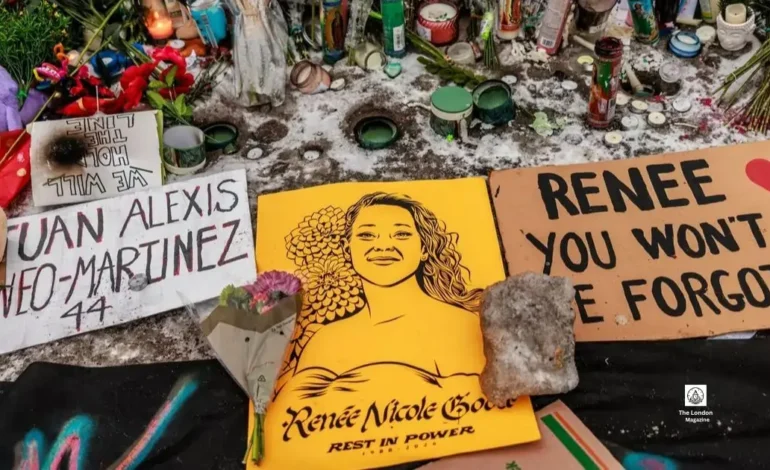

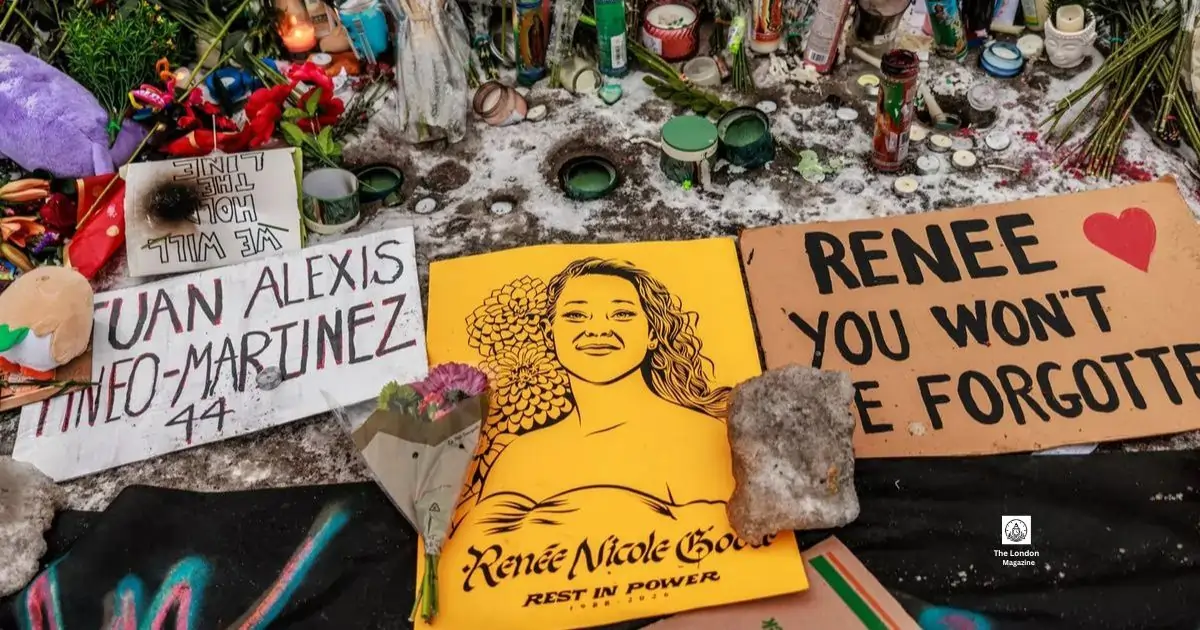
On a cold Minneapolis morning in January 2026, a mother dropped her six-year-old son at school and never came home. Renee Nicole Good — a 37-year-old American poet, mother of three, and U.S. citizen — was shot and killed by a federal immigration agent on a quiet residential street. Her death ignited nationwide protests, multiple investigations, and a fierce debate about accountability in federal law enforcement.
This article brings together the verified facts of the case: who Renee Nicole Good was, what the video evidence shows, what an independent autopsy found, and where the legal battle stands in 2026.
Who Was Renee Nicole Good?
Renee Nicole Good was a 37-year-old American citizen fatally shot by ICE agent Jonathan Ross in Minneapolis, Minnesota, on January 7, 2026 — a case now widely discussed as the ICE Officer Fatal Shooting in Minneapolis. She was seated in her Honda Pilot SUV when agents surrounded her vehicle during a federal immigration operation. Three shots were fired; a bullet to the head proved fatal. The FBI is investigating, while reports and video evidence continue to raise questions about the official self-defence narrative.
Background & Education
Renée Nicole Macklin Good (née Ganger) was born on April 2, 1988, in Colorado Springs, Colorado. She earned an English degree from Old Dominion University in 2020 — a fact the university’s president, Brian O. Hemphill, highlighted in a public statement after her death, calling her killing ‘yet another clear example that fear and violence have sadly become commonplace in our nation.’
Family & Personal Life
Renee had been married twice. Her first marriage (2009–2016) produced two children. Her second husband, with whom she had a third child, died in 2023 at age 36. At the time of her death, she was living in south Minneapolis with her partner and her youngest child, a six-year-old son. She and her partner had previously lived in Kansas City, Missouri, before relocating to Canada following the 2024 U.S. presidential election, then settling in Minneapolis in the summer of 2025.
Her mother, Donna Ganger, described her as ‘one of the kindest people I’ve ever known — loving, forgiving and affectionate.’ Neighbours recalled her children’s sidewalk drawings and her family’s warm presence in the community. One neighbour told CNN she had ‘a really sweet family.’
For readers interested in other in-depth personal profiles, The London Magazine has previously explored stories of individuals navigating complex public circumstances — such as Eli Kay-Oliphant in 2026.
What Happened? The Full Incident
The Morning of January 7, 2026
After dropping her six-year-old at school, Renee drove through her south Minneapolis neighbourhood, where federal agents were conducting Operation Metro Surge — the largest immigration enforcement action in U.S. history. The Department of Homeland Security had deployed approximately 2,000 federal agents to the Minneapolis–Saint Paul area starting January 6.
According to her partner’s statement, Renee had stopped to ‘support our neighbours’ when she encountered ICE agents operating near 34th Street and Portland Avenue. Her Honda Pilot SUV came to a stop sideways in the street.
The Shooting — What the Video Shows
ICE agent Jonathan Ross began circling Good’s vehicle on foot. At least three masked federal agents surrounded the car. Good’s partner stood behind the vehicle, filming on her phone. One agent reached through an open window and ordered Good to exit.
Video footage — verified by ABC News from at least four separate angles, including footage from Ross’s own cellphone — shows what happened next. Good’s vehicle moved briefly in reverse, then began moving forward and to the right, toward oncoming traffic. Ross was standing to the front-left of the car. He fired three shots as the SUV passed him, with the wheels turning away from his position. The interval between the first and second shots was 399 milliseconds. Three seconds after the shots were fired, the Honda Pilot crashed into a parked car. Renee Nicole Good was pronounced dead at the scene.
Timeline of Events
Before the Incident
- January 6, 2026: DHS launches Operation Metro Surge — the largest immigration enforcement operation in U.S. history — deploying 2,000 agents across the Minneapolis–Saint Paul metro area.
- Saint Paul City Council member Molly Coleman described it as ‘unlike any other day we’ve experienced.’ Eyewitnesses say communities had been ‘terrorized by ICE for six weeks.’
- Morning of January 7: Good drops her son off at school and drives through her neighbourhood.
During the Incident
- Good’s Honda Pilot stops sideways on Portland Avenue.
- ICE agent Jonathan Ross circles the vehicle. Three masked agents surround the car.
- Good’s partner stands behind the vehicle, filming on her phone.
- An agent reaches through the window and orders Good to get out.
- The SUV briefly reverses, then moves forward and to the right.
- Ross fires three shots in rapid succession (399ms between shots one and two).
Immediate Aftermath
- Good’s SUV crashes into a parked car. She was pronounced dead at the scene.
- Minneapolis PD activates mutual aid from surrounding jurisdictions.
- DHS Secretary Kristi Noem holds a press conference defending the agent.
- Within hours, hundreds gather for a candlelight vigil near the site.
- Minneapolis Mayor Jacob Frey publicly contradicts the DHS account.
New Evidence & 2026 Updates
Independent Autopsy Findings
Good’s family commissioned an independent autopsy as part of their civil investigation, conducted by what attorneys described as ‘a highly respected and credentialed medical pathologist.’ The preliminary findings identified three gunshot wounds and a fourth graze wound.
Wound-by-Wound Breakdown
- Left forearm — soft tissue damage; not immediately life-threatening.
- Right breast — bullet entry without penetrating major organs; not immediately life-threatening.
- Left temple — bullet entered near the left temple, exited from the right side of the head. This was the fatal wound.
- Fourth wound — a graze consistent with a firearm injury, no penetration.
The Hennepin County Medical Examiner’s official autopsy had not been released to the Good family or their legal team at the time of the independent report’s publication.
What the Video Evidence Shows
BBC News conducted a frame-by-frame analysis of footage from multiple cameras. It found that, in the one second before Ross fired, Good’s steering wheel was turning to the right — away from where Ross was standing. The vehicle was moving toward oncoming traffic, not toward the agent.
The ICE officer’s own cellphone footage, obtained by investigators, reportedly shows Good smiling calmly and saying ‘That’s fine’ to the agent just before the shooting — directly contradicting the government’s characterization of a violent confrontation.
The Broader Pattern – ICE Shootings in Context
Good’s killing was not an isolated event. According to the Vera Institute of Justice, since President Trump returned to office, immigration agents had opened fire at least 17 times, killing four people and injuring another eight as of early 2026. Good’s death was the ninth time ICE agents had discharged firearms since September 2025, spanning five states and Washington, D.C.
The American Immigration Council reported that six people died in ICE custody in January 2026 alone — across detention facilities in Texas, Pennsylvania, Georgia, and California. In 2025, 32 people died in ICE custody, the deadliest year in more than two decades. The daily average number of people in immigration detention by the end of 2025 was 78% higher than the year prior.
Conflicting Claims & Controversy
The Federal Government’s Position
DHS Secretary Kristi Noem stated that Good ‘ignored commands to get out of the car’ and tried to run over an ICE officer in what she described as an ‘attempt to kill or cause bodily harm to agents.’ President Donald Trump called Good ‘very violent’ and ‘very radical.’ Vice President J.D. Vance described her as ‘brainwashed and a victim of left-wing ideology.’
The DHS maintained that Good was ‘weaponizing her vehicle, a deadly weapon,’ and that Agent Ross ‘feared for his life’ when he fired.
What Critics, Experts, and Officials Say
State and local officials who viewed the footage reached the opposite conclusion. Mayor Jacob Frey said publicly: ‘Having seen the video myself, I want to tell everybody directly — that is bullshit.’ Minneapolis Police Chief Brian O’Hara called Good’s killing ‘predictable and preventable.’
The U.S. House Oversight Committee’s Minnesota report concluded that claims Good ‘ran over’ the ICE officer were ‘clearly false,’ pointing specifically to the agent’s own cellphone footage as contradicting the government’s account.
A YouGov/Economist poll taken January 9–12, 2026 — just days after the shooting — found that 53% of Americans believed the shooting was not justified, while only 35% said it was.
A Key Unanswered Question
DHS Secretary Noem confirmed the agent was treated at a hospital before being released, but declined to answer whether he was struck by Good’s vehicle before or after he fired. This timing is central to whether the use of force can be considered defensive.
Legal Actions & Investigation
FBI Investigation & State Exclusion
The FBI is leading the criminal investigation. On January 8, the head of Minnesota’s Bureau of Criminal Apprehension disclosed that the FBI had revoked the state’s access to evidence — reversing an earlier joint-investigation agreement. State officials have since been effectively excluded from the probe.
The Department of Justice formally declined to open a federal civil rights investigation into the shooting — a decision condemned by civil rights advocates. Instead, the DOJ served grand jury subpoenas to the offices of Governor Tim Walz, Attorney General Keith Ellison, and Mayor Jacob Frey, framing the investigation as targeting alleged obstruction of federal operations.
Family’s Civil Case
Good’s family retained Romanucci & Blandin, the Chicago-based firm that represented the family of George Floyd after he died in Minneapolis in 2020. The firm is pursuing civil claims against ICE and the federal government. Lead attorney Antonio M. Romanucci stated the evidence gathered ‘will suffice to prove our case.’
Six federal prosecutors reportedly resigned in protest after the DOJ chose to investigate Good’s widow, Becca, rather than the agent who shot Renee.
Legislative & Congressional Response
On February 3, 2026, Good’s brothers, Luke and Brent Ganger, testified before a congressional forum at the U.S. Capitol at the invitation of Democratic lawmakers. Minnesota separately sued the federal government seeking access to evidence; a federal judge ordered evidence to be provided to the court.
On January 15, Democratic Representative Shri Thanedar of Michigan introduced the Abolish ICE Act. Multiple additional accountability bills were introduced — including the Federal Law Enforcement Standards and Accountability (FLESA) Act and the Stop Excessive Force in Immigration Act — though all face uncertain odds in a divided Congress.
Why Is Renee Nicole Good Trending?
Several factors converged to make this case a national turning point. It occurred during an unprecedented federal enforcement surge in a city still processing the legacy of George Floyd’s 2020 death. Good was a U.S. citizen — not the undocumented immigrant the enforcement operation targeted — which immediately changed the political calculus.
The video footage contradicting the government’s account spread rapidly on social media, and federal officials’ response — blocking state investigators, declining a civil rights probe, and launching what critics called a retaliatory investigation of local elected officials — compounded public outrage.
More broadly, Good’s death was the ninth ICE shooting in five months. The pattern had been underreported; this case put it in unavoidable focus.
Public Reaction & Cultural Impact
Protests & Political Fallout
Vigils and protests formed immediately. Within days, nationwide demonstrations spread across major U.S. cities. Governor Tim Walz declared January 9, 2026, ‘Renee Good Day’ in Minnesota. Politico reported that Good’s killing ‘kicked off a series of efforts by state legislators nationwide to limit cooperation with and increase oversight of ICE.’
The YouGov/Economist poll (January 9–12, 2026) found 46% of Americans supported abolishing ICE, with 43% opposed — a figure that reflected a sharp shift in public opinion, and one that political strategists flagged as a major factor heading into the 2026 U.S. midterm elections.
Cultural & Musical Response
Musicians including Billie Eilish, Dave Matthews, and Neil Young publicly condemned ICE. On January 17, Bruce Springsteen dedicated a performance to Good at the Light of Day Winterfest in New Jersey, then released ‘Streets of Minneapolis’ on January 28 — a protest song written in direct response to the case.
On January 30, guitarist Tom Morello organized the ‘Defend Minnesota’ benefit concert in Minneapolis, featuring Springsteen and Rise Against, with proceeds going to Good’s family. On February 4, Dropkick Murphys released the single ‘Citizen I.C.E.’, saying: ‘As Americans are being executed in the street, we feel it is our duty to raise consciousness.’
Conclusion
The case of Renee Nicole Good raises serious questions about federal power, accountability, and transparency. On January 7, 2026, the 37-year-old mother was shot by an ICE agent in Minneapolis, sparking nationwide controversy. Video evidence appears to challenge official claims, while investigations continue amid legal battles and public scrutiny. As authorities and courts examine the facts, The London Magazine will continue reporting, ensuring that developments are followed closely and the full truth behind this tragic incident is brought to light.
Frequently Asked Questions
Who was Renee Nicole Good?
Renee Nicole Good, née Ganger, was a 37-year-old American mother of three, poet, and writer from Colorado Springs, educated in English at Old Dominion University, living in Minneapolis in 2026.
How did Renee Nicole Good die?
She was fatally shot on January 7, 2026, in Minneapolis by ICE agent Jonathan Ross while inside her Honda Pilot SUV during a federal immigration operation, according to official reports.
What is the latest update in the Renee Nicole Good case in 2026?
As of April 2026, the FBI investigation remains ongoing, with the Department of Justice declining a civil rights probe, while her family pursues civil claims and Minnesota seeks evidence access.
Was Renee Nicole Good involved in activism?
Her family says she stopped to support neighbours during the ICE operation, but no verified evidence confirms activism, despite attempts by the Trump administration to link her to anti-ICE groups.
What is the legal status of the case?
The case remains active, involving an FBI investigation, civil proceedings by her family, a DOJ refusal for a civil rights probe, Minnesota’s lawsuit, and congressional scrutiny, with no charges filed.
Why is this case so controversial?
The case is controversial because video evidence appears to contradict self-defence claims, showing her car turning away, alongside federal resistance to state investigators and actions critics describe as politically motivated.