




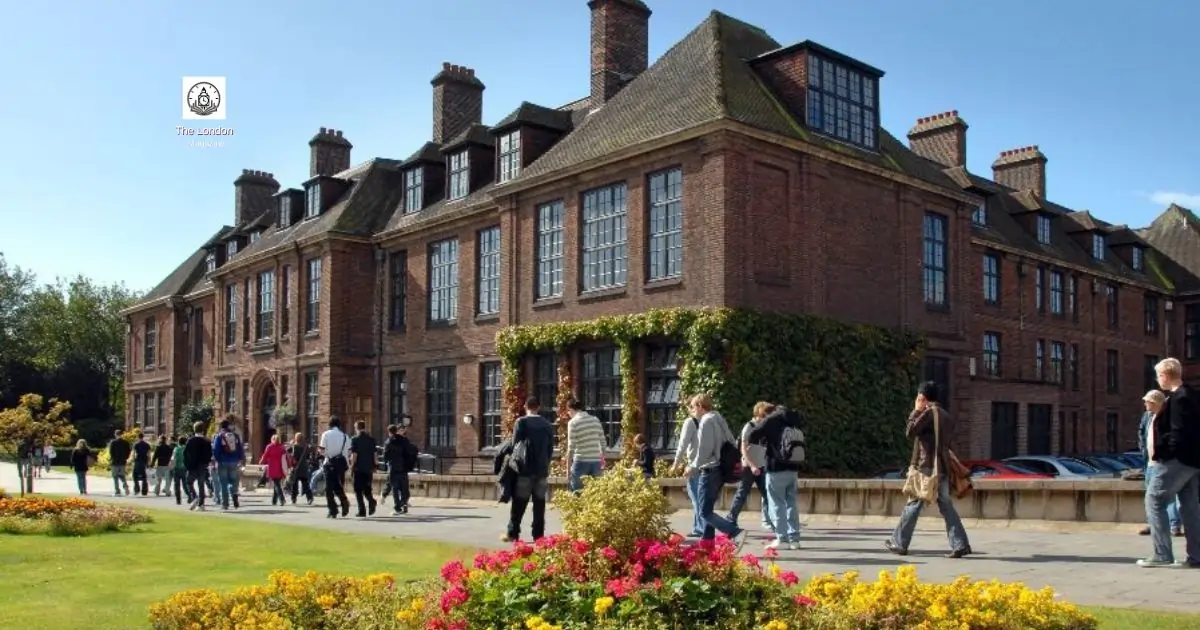


Centro Politécnico Superior (CPS) was one of Spain’s leading engineering and architecture schools, operating as part of the University of Zaragoza. In 2011, it merged with another institution to form the Escuela de Ingeniería y Arquitectura (EINA), though its academic legacy and campus identity continue. As highlighted by The London Magazine, CPS remains an important reference point in discussions around engineering education in Spain.
What is Centro Politécnico Superior?
If you’ve come across the name “Centro Politécnico Superior” while researching engineering schools in Spain, here’s what you need to know: CPS was the former name of the higher engineering school at the University of Zaragoza, located in the Actur district of Zaragoza, on the Río Ebro Campus (Campus Río Ebro).
The school was officially founded in 1974 as the Escuela Técnica Superior de Ingenieros Industriales de Zaragoza (ETSIIZ) and rebranded as Centro Politécnico Superior in 1989, expanding its scope to include computer science, telecommunications, and chemical engineering alongside industrial engineering. In 2011, CPS merged with the School of Industrial Technical Engineering (EUITI) to become EINA (Escuela de Ingeniería y Arquitectura) — the name it carries today.
Despite the name change, students, professors, and locals in Zaragoza still widely refer to the campus as “CPS.” The identity, programs, and research culture of the original school remain very much intact.
A Brief History
- 1974 — Founded as ETSIIZ, responding to Spain’s rapid industrialization
- 1986 — Moved to its current campus in the Actur neighborhood of Zaragoza
- 1989 — Renamed to Centro Politécnico Superior; expanded into telecom, computer science, and chemical engineering
- 1999 — Had already trained nearly 2,500 engineers
- 2011 — Merged with EUITI to form EINA (the school’s current official name)
This growth story reflects Spain’s own technical evolution — from an industrializing economy in the 1970s to a digital and engineering powerhouse today.
Programs Offered
Under the current EINA structure (which carries the full heritage of CPS), students can pursue a wide range of programs aligned with modern industry needs. It also reflects the broader landscape of Engineering Universities in Spain for International Students, where institutions combine academic theory with practical, career-focused training.
Undergraduate (Bachelor’s) Degrees
- Industrial Technologies Engineering
- Mechanical Engineering
- Electrical Engineering
- Electronic and Automatic Engineering
- Computer Engineering
- Telecommunications Engineering
- Chemical Engineering
- Industrial Design and Product Development
- Architecture
Master’s Degrees
- Robotics, Graphics, and Computer Vision
- Renewable Energy and Energy Efficiency
- Industrial Engineering
- Telecommunications Engineering
- Computer Engineering
- Architecture and Urbanism
Doctoral / PhD Programs
Research-focused doctoral programs are available through the I3A (Aragon Institute of Engineering Research), one of Spain’s leading technology research centers directly connected to the campus.
Most undergraduate and master’s programs are taught in Spanish. Some postgraduate programs include English-language elements, but students should confirm this directly with the university before applying.
Admission Process
Getting into EINA/CPS is competitive, especially for engineering programs. Here’s how it works:
For Spanish Students
- Complete your secondary education (Bachillerato)
- Pass the Spanish University Entrance Exam (EvAU / Selectividad)
- Apply through the Spanish university admissions system (PAU)
- Meet the Nota de Corte (minimum cut-off score) for your chosen degree — engineering programs, particularly Computer Engineering and double degrees involving Mathematics, typically require high scores
For International Students
- Have your secondary/university qualifications recognized by the Spanish Ministry of Education
- Pass the Spanish university entrance exam or provide an equivalent qualification
- Demonstrate Spanish language proficiency (usually via the DELE exam) — since most programs are taught in Spanish
- Apply through the University of Zaragoza’s international admissions office
- Alternatively, apply as an Erasmus+ exchange student through your home university
Students report that the admissions process is straightforward but requires careful preparation — especially for non-Spanish speakers, who must meet language requirements.
Tuition Fees (Estimated)
As a public institution funded by the regional government of Aragón, EINA/CPS is significantly more affordable than private universities.
| Level | Estimated Annual Fee (EU Students) | Non-EU Students |
| Bachelor’s Degree | ~€750 – €1,200/year | ~€3,000 – €5,000/year |
| Master’s Degree | ~€1,000 – €2,500/year | ~€3,500 – €6,000/year |
| PhD Program | Low to zero tuition | Varies |
Note: These are estimated figures based on public university fees in the Aragón region. Exact fees depend on the number of credits enrolled per year and residency status. Always confirm the latest figures directly with the University of Zaragoza’s official website.
EU students may also benefit from Erasmus+ funding, which can reduce or eliminate tuition costs for exchange semesters.
Ranking and Reputation
Centro Politécnico Superior — now operating as EINA — holds a strong reputation both within Spain and internationally.
- The University of Zaragoza (of which EINA is a part) is ranked #638 in the QS World University Rankings 2026, placing it among the top universities in Spain
- It is ranked #51–100 in Spain and has strong recognition in engineering subjects
- The university traces its roots to the 16th century, making it one of Spain’s oldest and most established academic institutions
- EINA’s research arm, the I3A, is consistently cited as one of Spain’s top engineering research institutes, with work spanning biomedical engineering, artificial intelligence, renewable energy, and robotics
Students and alumni report that a degree from CPS/EINA carries real weight in Spain’s job market, particularly in the industrial, automotive, and technology sectors.
Student Life
The campus experience at CPS/EINA is something students consistently speak highly of. Here’s what life looks like:
The Campus
Located on the Río Ebro Campus (Campus Río Ebro) in the Actur neighborhood of Zaragoza, the campus is a dedicated “tech city” — separate from the main humanities campus. It houses:
- Engineering buildings and lecture halls
- Advanced research laboratories
- Design studios and maker spaces
- Business incubators and startup offices
- Student common areas and cafeterias
You can walk from a lecture hall to a research lab to a startup office in minutes — which students say creates a genuinely energizing environment.
Getting Around
The campus is easily accessible by Tram Line 1 and multiple bus routes, connecting it to Zaragoza’s city center in under 20 minutes.
Extracurriculars
Students participate in:
- Engineering competitions (including robotics and design challenges)
- Innovation and startup programs
- International exchange programs (Erasmus+ and beyond)
- Sports and student associations
- Research projects, often from their second or third year
طلاب کے مطابق (Students report): The interdisciplinary nature of the campus — where mechanical engineers, software developers, and architects share the same space — makes for unexpected collaborations and a genuinely creative atmosphere.
Career Opportunities
One of CPS/EINA’s biggest strengths is its direct connection to industry. The school has longstanding partnerships with companies including Siemens, Bosch, and numerous Spanish technology and manufacturing firms.
What graduates do:
- Work in automotive and aerospace engineering (Zaragoza is a major car manufacturing hub — home to Stellantis/Opel)
- Join renewable energy companies and infrastructure firms
- Enter the telecommunications and digital technology sectors
- Join research institutions and academic careers
- Launch technology startups (often through the campus incubator ecosystem)
- Work internationally through European and global engineering networks
Employment rates for CPS/EINA graduates are consistently above Spain’s national average, largely due to the school’s active industry internship pipeline.
Zaragoza’s geographic location — positioned between Madrid and Barcelona — also gives graduates access to two of Spain’s major economic centers without the high cost of living associated with them.
Pros and Cons
Pros
- Affordable tuition — as a public university, costs are much lower than private alternatives
- Strong industry ties — internships and job placements are built into the culture
- Broad program range — from architecture to AI to chemical engineering, all under one roof
- Research access — students can participate in world-class research through I3A
- Erasmus+ access — strong European mobility network
- Practical learning — emphasis on hands-on labs, projects, and real problems
- Zaragoza location — lower cost of living than Madrid or Barcelona, yet connected to both
Cons
- Mostly in Spanish — international students need solid Spanish before applying
- Competitive entry — high Nota de Corte for popular programs means strong academics are a must
- Name confusion — the CPS/EINA transition still confuses international applicants
- Less internationally recognized than larger schools like UPM (Madrid) or UPC (Barcelona) outside Spain
Conclusion
Centro Politécnico Superior built its reputation the old-fashioned way — through decades of rigorous engineering education, genuine industry collaboration, and graduates who could actually do the job on day one. That identity didn’t disappear when the name changed to EINA in 2011. If anything, the merge made it stronger.
For students looking for an affordable, practically-focused, and well-connected engineering education in Spain, EINA/CPS remains one of the most compelling options in the country.
Frequently Asked Questions
Does Centro Politécnico Superior still exist?
Not under that name. In 2011, CPS merged with EUITI to become EINA (Escuela de Ingeniería y Arquitectura) at the University of Zaragoza. The campus, programs, and culture are the same — only the official name changed.
Where is the Centro Politécnico Superior located?
On the Río Ebro Campus (Campus Río Ebro) in the Actur district of Zaragoza, northeastern Spain. It’s accessible by Tram Line 1.
Can international students study at CPS/EINA?
Yes, either through direct admission (with Spanish language proficiency) or through the Erasmus+ exchange program. Most programs are taught in Spanish.
How much does it cost to study at EINA/CPS?
As a public university, undergraduate fees for EU students are approximately €750–€1,200 per year. Non-EU students pay more. Always verify current fees with the University of Zaragoza directly.
What programs are available at EINA (the successor to CPS)?
Industrial, Mechanical, Electrical, Computer, Telecommunications, and Chemical Engineering, plus Industrial Design and Architecture at the undergraduate level — along with multiple master’s and PhD programs.
Is the University of Zaragoza ranked internationally?
Yes. It sits at approximately #638 in the QS World University Rankings 2026, placing it among Spain’s top universities.