



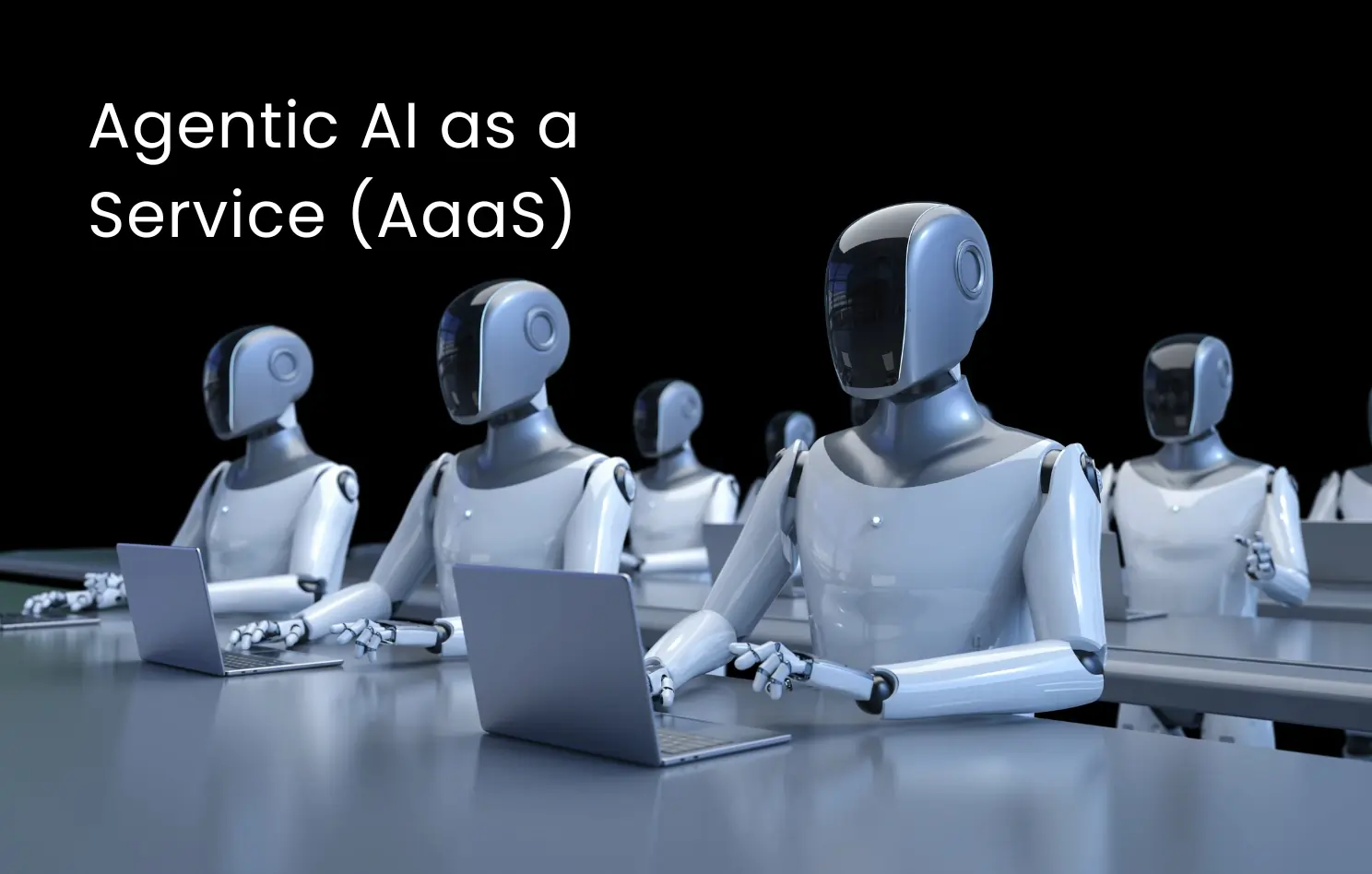


Agent as a Service – How Enterprises Are Finally Moving AI from Pilots to Production


Most enterprises don’t struggle with AI ideas—they struggle with making them work in real environments. While pilots and prototypes are common, turning them into reliable systems is where progress slows down. This challenge is increasingly discussed in innovation circles such as the Kellogg Innovation Network, where the focus has shifted toward execution. Agent as a Service is emerging as a practical way to bridge this gap, helping organizations move from experimentation to execution without the usual delays and complexity.
TL;DR
- Most AI projects fail before reaching production due to execution challenges
- This delivery model reduces infrastructure, integration, and governance complexity
- Enterprises can deploy faster and achieve measurable ROI sooner
- The real shift is from experimentation to consistent, scalable execution
AI Isn’t the Problem. Execution Is.
The Pattern Most Teams Experience
Across industries, enterprises have invested heavily in artificial intelligence over the past few years. They have built roadmaps, experimented with models, and even developed promising prototypes. On the surface, it looks like steady progress. However, once these initiatives move beyond the experimental stage, a different reality starts to emerge. Integration challenges become more visible, governance concerns begin to slow decision-making, and costs start rising faster than expected.
Research consistently shows that a large percentage of AI initiatives never reach production. The issue is rarely about the lack of ideas or technical capability. Instead, it comes down to execution. Turning a working prototype into a reliable, scalable system within a real business environment is significantly more complex than most teams anticipate.
The Real Gap
This gap between experimentation and production is not a failure of technology — it is a failure of operational readiness. Enterprises struggle to align systems, processes, and controls in a way that allows AI to function reliably at scale. This is precisely where Agent as a Service begins to offer a practical alternative.
What “Agent as a Service” Actually Means
A Clear Definition
Agent as a Service is a delivery model where pre-built, production-ready AI agents are provided through cloud platforms or APIs. Instead of developing systems from scratch, organizations can deploy agents that are already designed to operate within real-world workflows. These agents are not isolated models; they are structured to handle tasks across systems and environments.
How It Changes the Approach
Unlike traditional AI implementations, where teams spend months building infrastructure and pipelines, this model focuses on deployment from day one. The agents are capable of understanding context, making decisions based on defined logic, interacting with enterprise systems, and completing tasks end-to-end. This shifts the focus from building intelligence to applying it effectively.
Why Enterprises Are Moving Toward This Model
The Hidden Cost of Building In-House
Building AI systems internally often appears attractive because it offers control and customization. However, the reality is more demanding. Organizations must invest in hiring specialized talent, maintaining infrastructure, and continuously updating models. These efforts require significant time, and in many cases, projects take months before delivering usable outcomes. As highlighted in discussions across platforms like The London Magazine, the gap between building and operationalizing AI often reduces its overall impact. By the time systems are ready, business priorities may have already shifted, limiting the value delivered.
Speed as a Competitive Factor
There is also a noticeable shift in how enterprises define success. Instead of striving for perfect systems, teams are prioritizing speed and usability. A solution that delivers value within weeks is often more valuable than one that takes months to refine. This service-based approach supports that shift by reducing development time and allowing faster deployment.
Governance as a Core Requirement
As AI systems interact with sensitive data and critical processes, governance has become a central concern rather than an afterthought.
What Governance Involves
Effective governance includes traceability of decisions, audit logs, control mechanisms, and clear accountability. These elements ensure that AI systems operate within defined boundaries and meet regulatory requirements. Service-based delivery models often include these controls as part of the offering, which reduces the burden on internal teams.
What These Agents Actually Do in Practice
Moving Beyond Basic Automation
AI agents are often misunderstood as advanced chat interfaces, but their role in enterprise environments is much broader. They are designed to manage workflows that involve multiple steps, decisions, and interactions with different systems.
Real-World Applications
In financial operations, agents can review transactions, detect anomalies, and initiate compliance workflows. In healthcare, they assist with summarizing patient records and streamlining documentation. In customer support, they resolve issues by retrieving and updating information across multiple platforms, reducing the need for manual intervention.
The Key Difference
The defining characteristic of these agents is their ability to act. They do not simply generate insights; they execute tasks based on those insights, making them far more valuable in operational settings.
Under the Hood – Why These Systems Work
A Structured Architecture
Although these systems appear simple from the outside, they rely on a well-defined structure. This structure ensures that tasks are processed accurately and consistently.
Core Components
At a high level, these systems include a reasoning layer that interprets context and determines actions, an execution layer that interacts with systems, a memory layer that maintains continuity, and a governance layer that oversees operations. Together, these components create a reliable framework that supports real-world use cases.
Where This Model Delivers the Most Value
High-Impact Environments
The benefits are most visible in environments with repetitive, structured workflows. Operations-heavy processes, where tasks are manual and time-consuming, can be significantly improved. Customer-facing functions benefit from faster response times and consistent service. In regulated industries such as finance and healthcare, built-in governance helps reduce risk while enabling automation.
A Simple Insight
The more structured and repeatable a workflow is, the more effectively it can be automated using this approach.
The ROI Conversation Changes
A Shift in Perspective
One of the most important changes brought by this model is how organizations evaluate return on investment. Instead of questioning whether a system will work, the focus shifts to how quickly it can deliver value and scale.
Why Results Come Faster
Several factors contribute to faster ROI. Initial investment is lower compared to building full systems internally, deployment timelines are shorter, and operational risks are reduced through built-in controls. As a result, organizations begin to see measurable improvements within a relatively short period.
Practical Impact
In many cases, tasks that previously required several minutes of manual effort can be completed in a fraction of the time. This not only reduces costs but also allows teams to focus on more strategic work.
It’s Not a Perfect Solution
Limitations to Consider
Despite its advantages, this framework is not a complete solution to all challenges. The effectiveness of these systems depends heavily on the quality of data and the clarity of workflows. Poor data or undefined processes can limit results.
Risks That Need Attention
Organizations must also consider potential risks such as vendor dependency, data privacy concerns, inconsistent outputs, and integration challenges with legacy systems. Addressing these factors is essential for long-term success.
How Successful Teams Approach It
Start Small and Scale Gradually
Teams that achieve meaningful results typically begin with a focused approach. They select a single workflow that is both repetitive and valuable, implement the solution, and measure its performance.
A Practical Execution Strategy
After validating the initial use case, they refine the system and expand to additional workflows. This incremental approach reduces risk and increases the likelihood of success, compared to attempting large-scale transformation from the outset.
Where This Is Heading
The Evolution of AI Systems
The current generation of AI agents operates within defined boundaries, handling specific tasks. Over time, these systems are expected to become more interconnected, with multiple agents collaborating across functions to manage complex workflows.
The Emerging Gap
As this evolution continues, organizations that adopt and operationalize these systems early will gain a significant advantage. The difference will not come from access to technology, but from the ability to implement it effectively.
Final Thought
For years, artificial intelligence has been associated with experimentation and limited deployments. That phase is gradually coming to an end. The focus is now shifting toward execution — building systems that work reliably in real-world conditions and deliver consistent results at scale.
Agent as a Service represents this shift. It simplifies the path from concept to production and allows organizations to focus on outcomes rather than infrastructure. In the long run, the companies that succeed will not be the ones experimenting the most, but the ones executing effectively and consistently.
Frequently Asked Questions
What problem does Agent as a Service solve?
It removes the complexity of building AI systems from scratch, helping teams deploy functional solutions faster with less infrastructure, integration, and operational overhead.
How quickly can enterprises see results?
Most teams start seeing measurable improvements within a few weeks to a few months, depending on the complexity of the workflow being automated.
Does this model require high-quality data?
Yes, structured and clean data improves outcomes significantly. Poor data quality can limit the effectiveness of AI agents regardless of the platform used.
Can it integrate with existing enterprise systems?
Yes, these agents are designed to connect with existing tools, databases, and workflows through APIs, making integration a core part of the model.
Is Agent as a Service suitable for small teams?
Yes, it works well for both mid-sized and large teams, especially those looking to avoid heavy upfront investment and accelerate deployment timelines.