

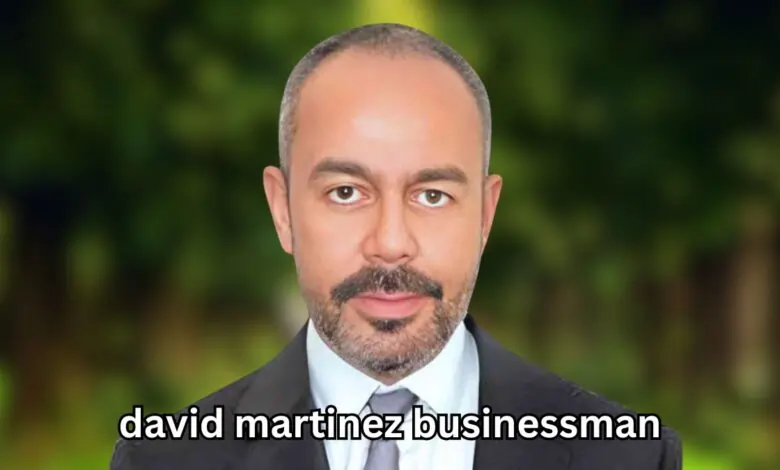




The Rise of David Martinez Businessman in Global Distressed Debt Markets
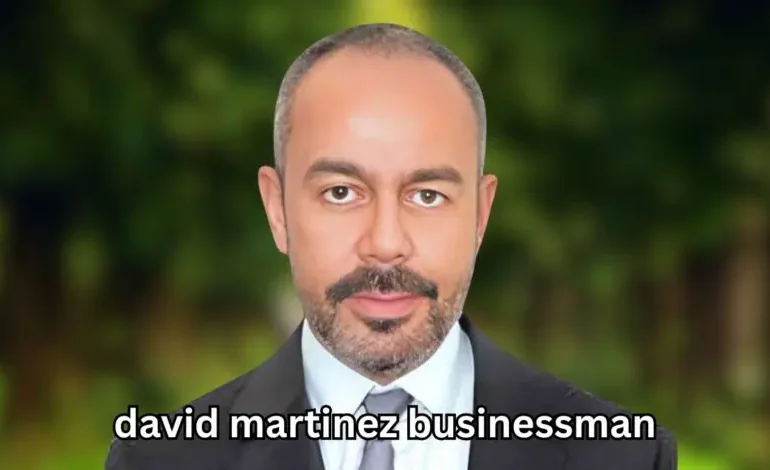

In the complex world of distressed debt investing, few figures have gained as much attention as david martinez businessman. He rose from working in emerging markets to becoming a well-known global debt strategist, as highlighted by The London Magazine.
Distressed debt markets involve buying assets at low prices when companies or countries face financial problems. This area requires strong financial and strategic skills. david martinez businessman built his reputation in this field. This article explores his career, strategies, and global impact.
Early Background and Career Development
Academic Foundations and Early Professional Life
David Martinez studied in Europe at ESADE Business School in Barcelona, one of the top business schools in Europe. Early in his career, he worked in Latin American markets during a time of economic instability, which gave him experience in handling financial crises and debt restructuring.
In the 1990s, many Latin American countries were recovering from debt crises. Programs like the Brady Plan helped convert bank debt into tradable bonds, creating new investment opportunities. This environment helped Martinez understand how struggling debt could be turned into profit.
Unlike many others in finance, david martinez businessman focused on the high-risk area of distressed debt. He built strong connections in Mexico, Argentina, and Brazil—markets that later became key to his investment strategy.
Transition to Independent Practice
By the mid-1990s, Martinez had accumulated sufficient deal experience and market knowledge to begin operating with greater independence. The shift from institutional employment to founding his own advisory and investment vehicle allowed him to pursue a more concentrated and idiosyncratic investment approach—one that would not be constrained by the risk committees or regulatory mandates typical of larger financial institutions.
Founding and Growth of Fintech Advisory
The Origins of Fintech Advisory
Fintech Advisory, the firm most closely associated with david martinez businessman, was established in the late 1990s. The name can cause some confusion in the current climate, given the popular association of ‘fintech’ with technology-driven financial services startups. In this case, the term predates the modern usage significantly; here it refers to financial technology in the classical sense—the application of sophisticated analytical and legal frameworks to complex debt situations.
The firm is headquartered in London and operates across international markets with a particular focus on sovereign debt restructuring, corporate distressed debt, and high-yield credit instruments in emerging markets. Its boutique structure allows for concentrated investment positions and direct engagement with debtors, creditors, and governments—a level of involvement that is difficult to sustain within larger, more bureaucratic investment organisations.
Institutional Structure and Operational Model
Fintech Advisory operates as a private investment firm, and as such, it is not subject to the same public disclosure obligations as listed companies or public funds. The firm reportedly manages assets on behalf of a concentrated group of institutional investors and family offices, allowing it to take on illiquid, long-duration positions without facing short-term redemption pressures.
This structural advantage is significant. In distressed debt markets, the ability to hold positions over extended restructuring timelines—often spanning three to seven years—is a meaningful competitive edge. Most institutional investors operate under mandates that preclude such long-dated illiquid exposure. For david martinez businessman, the boutique model was not simply a business preference; it was a deliberate structural choice aligned with the nature of the asset class.
The operations of firms like Fintech Advisory intersect at times with complex legal and financial proceedings. Readers interested in how large estates and financial claims are navigated through legal channels may find it informative to explore the legal and financial dimensions of disputed estate settlements, such as those examined in this analysis of the Sean Hughes Estate Charity Legal Battle, which illustrates the legal complexity that can arise when significant financial interests are contested.
Distressed Debt Investment Strategy Explained in Detail
What Is Distressed Debt Investing?
Distressed debt investing involves the acquisition of bonds, loans, or other debt instruments from entities that are either in default, near default, or undergoing formal restructuring proceedings. These instruments typically trade at substantial discounts to their face value—often between 20 and 70 cents on the dollar—reflecting the elevated risk that the investor may not recover the full principal.
The return profile in this asset class is asymmetric. If the restructuring succeeds, investors may recover far more than their purchase price. If it fails or is prolonged, they may recover very little. The skill in distressed debt investing lies in accurately assessing recovery values, negotiating creditor-side terms, and—where applicable—influencing the restructuring process itself through active participation.
Core Strategic Pillars
1. Deep Fundamental Analysis
Before acquiring any distressed position, the firm conducts extensive due diligence on the financial, legal, and political dimensions of the situation. For sovereign debt, this includes analysis of balance of payment dynamics, IMF programme status, political stability indicators, and foreign reserve levels.
2. Legal Expertise and Jurisdiction Strategy
Sovereign debt restructuring frequently involves complex multi-jurisdictional legal battles. The choice of governing law—whether New York law, English law, or another jurisdiction—has significant implications for creditor rights. Fintech Advisory’s approach incorporates legal strategy as a core element of the investment thesis, not merely a downstream consideration.
3. Active Creditor Engagement
Unlike passive distressed debt buyers who simply wait for a resolution, david martinez businessman and Fintech Advisory are known for active engagement in creditor committees and restructuring negotiations. This gives the firm a voice in determining the terms of any eventual settlement or exit.
4. Concentration and Patience
The firm typically maintains concentrated positions rather than diversified portfolios. This approach reflects a high-conviction investment philosophy: fewer, larger bets on specific situations where the team has deep expertise, rather than broad market exposure. Patience is equally central—the firm is prepared to hold positions through extended uncertainty.
Market Data | Distressed Debt Market Overview
| Market / Region | Avg. Discount to Par (2023) | Recovery Rate (Hist. Avg.) | Primary Driver |
| Latin America Sovereign | 35–60% | ~52% | Fiscal imbalance, political risk |
| Sub-Saharan Africa Sovereign | 40–70% | ~44% | External debt load, commodity cycles |
| Eastern Europe Corporate | 20–45% | ~58% | Geopolitical risk, refinancing gaps |
| EM High-Yield Bonds | 25–55% | ~47% | Rising US rates, dollar strength |
| Global Distressed (Broad Index) | 28–50% | ~49% | Rate cycle, credit spreads |
Major Global Deals and Case Studies
Latin American Sovereign Debt Engagement
The most well-documented aspect of david martinez businessman’s career involves his participation in several Latin American sovereign restructurings. Mexico’s financial landscape, with which he has maintained long-standing connections, has featured prominently in his portfolio history.
The Argentine debt crisis of 2001–2002—one of the largest sovereign defaults in history, involving approximately USD 100 billion in debt—created significant distressed opportunities. Creditors who engaged in the prolonged restructuring process, which ultimately concluded in 2016 after more than a decade of litigation, faced an extraordinary test of patience and legal strategy. Fintech Advisory’s involvement in Latin American sovereign situations reflects the firm’s capacity to navigate such extended timelines.
Venezuela and Energy-Linked Sovereign Debt
Venezuela’s economic deterioration throughout the 2010s produced one of the most complex distressed debt situations in recent history. With a sovereign facing oil revenue collapse, US sanctions, and severe fiscal imbalance, creditors holding Venezuelan government bonds and PDVSA (the state oil company) obligations faced near-total uncertainty over recovery prospects.
Distressed investors operating in Venezuelan debt required an understanding of energy markets, geopolitical dynamics, and US sanctions law simultaneously. Reports have linked Fintech Advisory’s interest to Venezuelan-related credit exposure, though the opacity of the firm’s holdings makes precise characterisation difficult.
Sovereign and Corporate Intersections
A feature of the distressed debt space is the frequent overlap between sovereign and corporate distressed situations. State-owned enterprises—common across Latin America, Africa, and parts of Asia—often carry sovereign guarantees or operate under quasi-sovereign financial structures. Analysing such entities requires a simultaneous understanding of government finances and corporate governance.
The david martinez businessman approach has consistently addressed these intersections, recognising that the credit risk of a state-owned enterprise cannot be analysed in isolation from the fiscal position of its sovereign sponsor.
Risk Management Approach
Structural Risk Mitigation
Risk management in distressed debt investing differs fundamentally from conventional fixed income. The traditional metrics of duration, interest rate sensitivity, and credit spread are insufficient when the underlying instrument may be in default or undergoing active restructuring. The primary risks are legal, political, and operational.
Fintech Advisory reportedly manages risk through several mechanisms. First, jurisdictional diversification ensures that no single legal or political outcome can impair the entire portfolio. Second, active legal engagement—through creditor committees and direct litigation where necessary—allows the firm to influence rather than merely react to restructuring outcomes. Third, holding instruments with different seniority levels within the same capital structure provides some internal hedge.
Political Risk Assessment
Political risk is inherent in sovereign and quasi-sovereign debt. Changes in government, shifts in policy, or the imposition of capital controls can materially alter recovery prospects. The firm’s long experience in emerging markets, particularly Latin America, has allowed it to develop sophisticated frameworks for assessing political risk—going beyond standard ratings agency analysis to incorporate on-the-ground intelligence and bilateral relationships.
Liquidity Management
Given the illiquid nature of distressed debt, liquidity management is a structural concern rather than a tactical one. The firm’s reliance on long-term capital from a limited investor base—rather than retail or short-duration institutional capital—mitigates the risk of forced liquidations at unfavourable prices. This is perhaps the most fundamental risk management tool available to a distressed debt specialist.
Wealth, Profile, and Public Characterisation
The David Martinez Billionaire Characterisation
The term david martinez billionaire has appeared in various financial media contexts, though precise net worth figures for private investors are inherently difficult to verify. Martinez is widely believed to be among the wealthiest individuals in Mexico, with wealth estimates in various publications suggesting a fortune in the range of several billion US dollars. His status as a significant holder of Televisa—one of Mexico’s largest media conglomerates—has contributed materially to this assessment.
The david martinez billionaire label, while widely used, is worth contextualising. Unlike publicly listed company founders or executives whose net worth can be tracked through shareholding disclosures, the wealth of private investment fund managers depends on opaque fund valuations, carried interest, and personal asset portfolios. The figure attributed to Martinez is therefore a composite estimate rather than a precisely audited figure.
Cultural and Public Identity | The David Martinez Actor Confusion
It is worth addressing a persistent source of confusion in public searches: the name ‘David Martinez’ is also associated with a david martinez actor from the entertainment industry—most notably the character David Martinez in the animated series ‘Cyberpunk: Edgerunners.’ This fictional character and the finance professional share only a name. The david martinez actor references found in search results are entirely unrelated to the investment and finance career discussed in this article, and readers should be aware of this distinction when conducting their own research.
Criticism, Controversies, and Regulatory Scrutiny
The ‘Vulture Fund’ Critique
Distressed debt investors—particularly those active in sovereign debt—have long been criticised under the broad label of ‘vulture funds.’ The term describes investors who purchase sovereign debt at deep discounts and then sue for full face value recovery, often blocking broader restructuring agreements that would benefit the majority of creditors.
The most high-profile case of this critique played out in the context of Argentina, where holdout creditors—those who refused to participate in the 2005 and 2010 debt exchange offers—pursued litigation for over a decade and ultimately extracted terms significantly more favourable than those accepted by exchange creditors. Distressed investors operating in such situations, including firms with profiles similar to Fintech Advisory, have faced significant reputational and political criticism as a result.
Transparency and Disclosure Concerns
Private investment firms operating in distressed debt markets are subject to limited mandatory public disclosure. This structural opacity, while legally permissible, has drawn criticism from sovereign debt reformers and civil society organisations who argue that greater transparency around the identity and motivations of holdout creditors would facilitate more orderly restructuring processes. The activities of david martinez businessman and Fintech Advisory have occasionally been mentioned in this broader debate, though no specific regulatory enforcement actions against the firm are on public record.
Regulatory Environment and International Norms
The broader regulatory environment for distressed sovereign debt investing has been evolving. The introduction of collective action clauses (CACs) in sovereign bond indentures—now standard in new issuances under both English and New York law—has reduced the leverage available to holdout creditors. The IMF has also issued guidance on best practices for sovereign debt restructuring that seeks to minimise disruption from holdout litigation. These developments have structurally altered the risk-return calculus for distressed sovereign debt investors.
For corporate distressed debt, the regulatory framework varies significantly by jurisdiction. US Chapter 11 proceedings, UK administration and pre-pack arrangements, and various emerging market insolvency frameworks each offer different protections and timelines for creditors. Navigating this multi-jurisdictional landscape is a core competency of the firm.
Televisa Investment and Media Asset Exposure
A Strategic Departure from Debt
Among the most publicly discussed aspects of david martinez businessman’s portfolio is his significant stake in Grupo Televisa, the Mexico-based multinational mass media company. This investment represents a departure from the distressed debt focus that defined most of his career and reflects a broader allocation to controlling or influential equity positions in strategic Latin American enterprises.
Televisa holds a dominant position in Mexican free-to-air broadcasting and has significant interests in satellite television, sports rights, and content production. It also controls Izzi Telecom, a major cable and broadband provider. The company has undergone significant strategic repositioning in recent years, including a merger of its content operations with Univision—the US Hispanic broadcaster—to form TelevisaUnivision, one of the world’s largest Spanish-language media companies.
Implications for Portfolio Concentration
The Televisa stake introduces a different type of risk to the portfolio: media industry disruption, regulatory risk in Mexico’s telecommunications sector, and currency exposure. In the context of a broader alternative investment portfolio, such an equity stake provides diversification away from distressed credit, but it also introduces correlation to macroeconomic conditions in Mexico that is partially offset by the global nature of the firm’s debt investments.
Market Impact and Long-Term Influence
Contribution to Distressed Debt Market Development
Specialists operating at the level of Fintech Advisory play a meaningful role in the functioning of distressed debt markets. By providing liquidity to sellers who need to exit positions in troubled credits, distressed investors perform a market-making function that, while controversial, contributes to price discovery and the efficient allocation of risk across the financial system.
The active involvement of sophisticated creditors in restructuring negotiations also, in theory, produces better-structured outcomes than passive acceptance of debtor-proposed terms. Creditor discipline, enforced by the threat of litigation, can incentivise debtors to propose more equitable restructuring terms upfront.
Influence on Sovereign Debt Restructuring Norms
The activities of high-profile distressed investors have had a tangible impact on the evolution of sovereign debt restructuring norms. The Argentine litigation saga, in which holdout creditors extracted above-average recoveries through US court enforcement, accelerated the adoption of enhanced collective action clauses and single-limb aggregation provisions in sovereign bond contracts. These changes, now embedded in ICMA model clauses, reflect the market’s direct response to the leverage demonstrated by active holdout creditors.
The broader legacy of david martinez businessman’s career is partly visible in these structural changes to the sovereign debt market. Whether one views his approach as a legitimate exercise of creditor rights or as an obstacle to efficient debt resolution, the market has adapted in ways that directly respond to the strategies he and others have employed.
Future Outlook: Distressed Debt in a High-Rate Environment
The global interest rate environment since 2022 has materially increased distressed debt opportunities. As central banks raised rates aggressively to combat inflation—particularly the US Federal Reserve, which raised rates by over 500 basis points between March 2022 and mid-2023—refinancing costs for leveraged borrowers rose sharply, pushing a significant volume of sub-investment grade and high-yield debt into distress.
According to Bloomberg data, the volume of distressed debt globally exceeded USD 650 billion by late 2023, with particular concentration in real estate, telecommunications, and highly leveraged buyout credits. This environment has created significant new opportunity sets for specialist managers, including those focused on the sovereign and quasi-sovereign segments of emerging markets.
Conclusion
david martinez businessman represents a distinctive archetype in global finance: a patient, legally sophisticated, and geopolitically aware distressed debt specialist who operates in markets where conventional investors are unwilling or unable to participate. His firm, Fintech Advisory, has shaped both individual deal outcomes and broader market norms around sovereign debt restructuring. Whether assessed as a market enabler or a contentious holdout creditor, his influence on global distressed debt markets is both measurable and enduring.
Frequently Asked Questions
What is distressed debt investing?
Distressed debt investing involves buying bonds or loans at significant discounts from entities in financial distress, aiming to profit through restructuring, recovery, or legal enforcement.
What firm is David Martinez associated with?
David Martinez is the founder of Fintech Advisory, a London-based private investment firm specialising in distressed debt and sovereign credit in emerging markets.
Is David Martinez connected to Televisa?
Yes. david martinez businessman holds a significant equity stake in Grupo Televisa, Mexico’s largest broadcasting conglomerate, representing a key part of his broader investment portfolio.
What does a ‘vulture fund’ mean in distressed debt?
A vulture fund buys sovereign or corporate debt at deep discounts and pursues litigation for full repayment, often blocking broader restructuring deals. It is a controversial but legal practice.
How have sovereign debt restructuring rules changed due to distressed investors?
Largely in response to holdout creditor litigation, sovereign bonds now routinely include collective action clauses that limit the ability of minority creditors to block majority-agreed restructuring terms.