


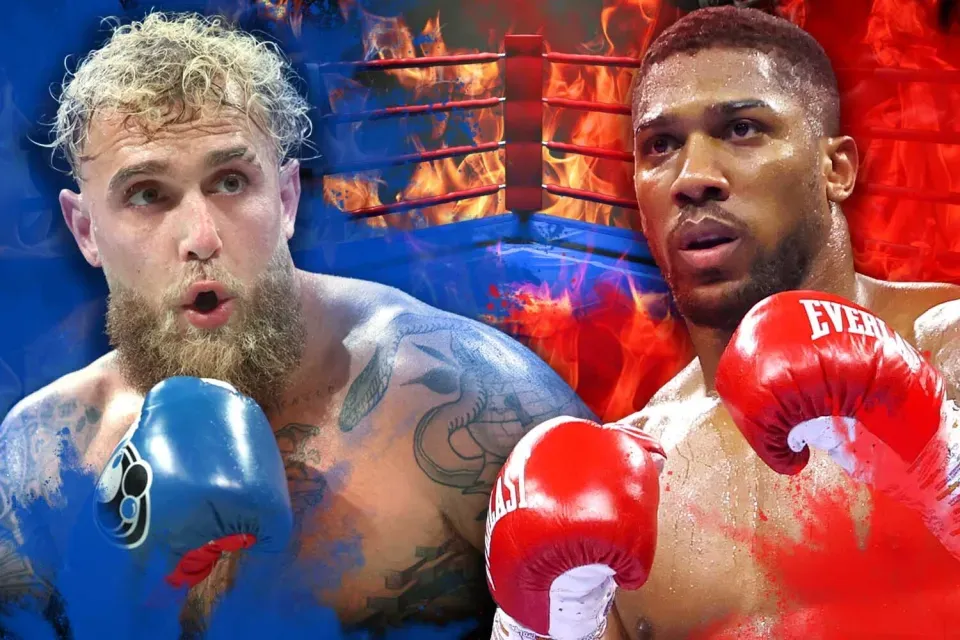
The idea of Anthony Joshua facing Jake Paul is more than a boxing spectacle—it signals how the sport is evolving. As digital influence reshapes promotion and revenue, this potential matchup highlights boxing’s shifting relationship with celebrity and audience reach. As examined by The London Magazine, Joshua brings Olympic gold and heavyweight championship pedigree, while Paul offers crossover appeal and algorithm-driven visibility. Understanding why Jake Paul vs Anthony Joshua dominates discussion requires examining both careers and the forces redefining relevance in modern boxing.
Anthony Joshua | Competitive Background and Achievements
Olympic Success and Professional Acceleration
Anthony Joshua’s path to heavyweight prominence followed a compressed timeline by historical standards. After claiming super-heavyweight gold at the 2012 London Olympics, Joshua turned professional in October 2013. Within four years, he had captured the IBF heavyweight title by stopping Charles Martin in April 2016, then added the WBA and IBO titles with a dramatic eleventh-round stoppage of Wladimir Klitschko at Wembley Stadium in April 2017—a fight widely regarded as rekindling mainstream British interest in heavyweight boxing.
Championship Resume and Elite Opposition
Joshua’s competitive record through early 2025 includes victories over former champions Joseph Parker (unified WBA, IBF, WBO titles), Alexander Povetkin (ninth-round knockout), and Kubrat Pulev. His losses—to Andy Ruiz Jr. in June 2019 (seventh-round TKO) and twice to Oleksandr Usyk (September 2021 and August 2022, both by decision)—came in world title fights against technically superior opponents, demonstrating both the depth of modern heavyweight competition and Joshua’s willingness to face elite-level opposition.
For readers interested in how major sporting moments shape audience engagement beyond boxing, we explore similar dynamics in darts. Our related article on the PDC World Darts Championship 2025 examines Luke Littler’s historic rise and its wider impact on the sport’s global appeal.
Anthony Joshua — Career Highlights and Record Overview
| Metric | Figure | Context |
| Professional Record | 28 wins, 3 losses (as of early 2025) | All losses in world title fights |
| Knockout Percentage | Approximately 82% | 23 of 28 victories by stoppage |
| World Title Fights | 15+ championship bouts | Defended or challenged for titles consistently 2016-2022 |
| Olympic Achievement | Gold Medal, 2012 London | Super-heavyweight division |
| Major Venue Headliner | Wembley Stadium, Principality Stadium | 80,000+ attendance multiple times |
Joshua’s competitive legitimacy derives from sustained engagement with the sport’s elite tier. His willingness to accept high-risk matchmaking—particularly the Usyk rematches—distinguishes his career from fighters who prioritize undefeated records over championship opportunities.
Market Value, Brand Power, and Career Earnings
Understanding Anthony Joshua Net Worth
Anthony Joshua Net Worth estimates typically range between £150 million and £200 million, though precise figures remain speculative given the private nature of boxing purses and endorsement structures. What can be assessed with greater confidence is the revenue framework that produced this valuation: Joshua headlined multiple pay-per-view events, generating over one million buys in the UK market, commanded purses reportedly exceeding £60 million for the Usyk fights, and maintained endorsement partnerships with brands including Jaguar Land Rover, Under Armour, and Lucozade.
Heavyweight Economics and Commercial Peak
The economics of heavyweight championship boxing have historically rewarded sustained title reign and cultural visibility. Joshua’s commercial peak coincided with his status as unified champion (2018-2019), when he represented the rare convergence of competitive dominance and mainstream crossover appeal. His subsequent losses to Usyk diminished his negotiating leverage but did not eliminate his drawing power—a testament to brand equity built through Olympic success, knockout victories, and consistent stadium-filling attendance.
Jake Paul | Boxing Development and Competitive Learning Curve
Age, Athletic Prime, and Training Timeline
Jake Paul’s entry into professional boxing followed an unconventional path that has nonetheless produced measurable progression. Beginning with an amateur bout in August 2018, Paul transitioned to professional competition in January 2020, compiling a record built primarily against former mixed martial arts competitors. The Jake Paul age factor—born January 17, 1997, making him 28 years old—places him at a conventional prime age for athletic development in combat sports.
Unlike Joshua, who began serious boxing training in his early twenties after brief involvement with amateur competition, Paul has dedicated approximately six years to intensive training under professional guidance, including work with former champion trainer B.J. Flores and sparring with established professionals.
Opponent Selection and Skill Development
Paul’s opponents have included Ben Askren (retired welterweight MMA fighter), Tyron Woodley (former UFC champion, fought twice), Anderson Silva (former UFC middleweight champion), and Nate Diaz (UFC veteran). Critics correctly note that Paul’s opposition has consisted predominantly of fighters transitioning from MMA, where boxing-specific skills represent only a portion of technical training.
The most significant test of Paul’s legitimacy came against Tommy Fury in February 2023, where he faced an undefeated professional boxer with familial lineage and conventional development. Paul lost a split decision, revealing defensive vulnerabilities against an opponent with superior footwork and boxing-specific conditioning, but demonstrated improved durability and punch output compared to earlier performances.
Injuries, Setbacks, and Durability
The Jake Paul Broken Jaw Incident
Combat sports injuries provide crucial context for understanding fighter availability and performance sustainability. The Jake Paul broken jaw incident, which reportedly occurred during preparation for his bout with Tommy Fury, represents the type of injury common in contact sports yet often underreported in promotional narratives. A mandibular fracture typically requires 6-8 weeks of healing time and can affect a fighter’s willingness to engage in close-range exchanges, a psychological component of injury recovery frequently overlooked in casual analysis.

Medical Suspensions and Long-Term Viability
Medical suspensions following competition, whether due to accumulated facial trauma, hand injuries, or concussion protocols, are standard regulatory safeguards. Paul’s relative lack of such suspensions throughout his professional career suggests either favorable outcomes in his completed bouts or strategic opponent selection that has minimized sustained damage.
Financial Standing and Commercial Reach
Jake Paul Net Worth and Revenue Streams
Jake Paul Net Worth estimates vary widely, with credible sources suggesting figures between $80 million and $120 million. These valuations derive from multiple revenue streams: fight purses, pay-per-view percentages, sponsorship agreements, social media monetization, and entrepreneurial ventures, including his Most Valuable Promotions company.
The Influencer Economy Model
The influencer economy enables Paul to generate income independent of boxing outcomes through sustained digital engagement. His combined social media following exceeds 40 million across platforms, creating advertising value that traditional promoters can leverage for fight marketing. This audience reach translates directly to pay-per-view sales—Paul’s bout with Tommy Fury reportedly generated approximately 800,000 buys despite neither fighter holding a world title, demonstrating commercial viability divorced from traditional championship credentials.
Comparing Experience Levels — Championship Boxing vs Crossover Progression
Quantifying the Competitive Gap
The competitive gulf between Anthony Joshua’s resume and Jake Paul’s record represents the central analytical challenge in assessing this potential matchmaking. Joshua has faced multiple former or reigning world champions, contenders ranked within the top fifteen by major sanctioning bodies, and Olympic-level amateurs who transitioned professionally. Paul has primarily competed against athletes transitioning from mixed martial arts.
Opponent Quality Comparison — Joshua vs Paul
| Fighter | Combined Opponent Record | Title Fights | Olympic/Elite Amateur Opponents | Former World Champions Faced |
| Anthony Joshua | Approximately 750 wins combined | 15+ championship bouts | 3+ (including Klitschko, Povetkin, Parker) | 5+ (Klitschko, Povetkin, Parker, Ruiz, Pulev) |
| Jake Paul | Approximately 350 wins combined (MMA + boxing) | 0 title fights | 0 | 0 (UFC champions, not boxing) |
Championship Pressure and Ring Experience
Ring exposure—the accumulated experience of facing diverse tactical approaches under championship-level pressure—cannot be replicated in training. Joshua has competed in front of 80,000+ spectators at Wembley Stadium multiple times, fought twelve-round championship distances repeatedly, and made real-time tactical adjustments against opponents capable of exploiting defensive lapses. Paul’s longest professional bout extended eight rounds.
Physical Metrics and Ring Attributes
Size and Reach Advantages
Physical dimensions influence tactical options and strategic approach in boxing. Anthony Joshua stands approximately 6’6″ (198 cm) with a reported reach of 82 inches (208 cm) and has campaigned primarily as a heavyweight, weighing between 240-250 pounds for most championship bouts. Jake Paul stands approximately 6’1″ (185 cm) with a reach of 76 inches (193 cm) and has competed between 185-200 pounds.
Tactical Implications of Physical Disparity
Joshua’s height and reach advantages enable him to control distance with his jab, maintain outside positioning, and generate leverage on power punches. Paul’s relative compactness may theoretically offer advantages in close-range exchanges, but this requires closing distance against a significantly larger opponent with superior footwork and ringcraft.
Psychological and Reputational Stakes
Joshua’s Legacy Considerations
The asymmetric risk profiles in a potential Joshua-Paul contest define the psychological dynamics preceding any such matchmaking. For Joshua, a victory over Paul—however dominant—would unlikely restore his status as unified champion or erase the competitive narrative established by his losses to Usyk. Boxing historians would contextualize such a win as expected, given the experience disparity.
Conversely, a loss to Paul would fundamentally damage Joshua’s legacy and future earning potential. Regardless of circumstances—weight differential, ring rust, or other factors—the perception of losing to a fighter with Paul’s background would overshadow Joshua’s championship accomplishments in mainstream media coverage.
Paul’s Upside Potential
Paul faces inverse stakes. A loss to Joshua—particularly by stoppage—could be rationalized given the size and experience differential, limiting damage to his boxing credibility. A competitive performance, let alone an upset victory, would immediately legitimize his boxing development and position him for more lucrative opportunities against established professionals.
Contextualizing the Tommy Fury Comparison
Comparisons frequently arise regarding Anthony Joshua Jake Paul Tommy Fury, referencing Paul’s loss to Tommy Fury as evidence of vulnerability against orthodox professional boxers. Fury, despite his relatively limited professional experience, possessed conventional development, consistent amateur background, and superior footwork—attributes that proved decisive in a close decision. Joshua’s advantages over Fury in size, power, and championship experience would theoretically magnify these factors.
Rules, Rounds, and Equipment
Commission Oversight and Safety Standards
Athletic commissions enforce regulatory frameworks designed to ensure competitive equity and fighter safety. Any sanctioned Joshua-Paul bout would require approval from the relevant jurisdiction’s boxing commission, which would determine appropriate rules, including round duration, glove size, weight agreements, and medical examination requirements.
Weight Class Considerations
Weight agreements present particular complexity for Joshua-Paul matchmaking. Joshua’s natural fighting weight sits approximately forty to fifty pounds above Paul’s recent competition weights. A contracted catchweight—a predetermined limit between traditional weight classes—could theoretically reduce this advantage, though asking Joshua to reduce significantly below 225 pounds would compromise his natural physicality while still leaving a substantial size differential.
Medical and Equipment Standards
Medical requirements include pre-fight examinations, neurological assessments, and mandatory insurance coverage. Standard professional boxing contests extend either eight, ten, or twelve rounds of three minutes each. Glove weight typically ranges from eight ounces (used in lighter weight classes) to ten ounces (standard for heavyweight competition).
Cultural Context — Why These Fights Exist Now
From Network Television to Social Media
The proliferation of crossover boxing events reflects broader transformations in sports media consumption, audience fragmentation, and attention economics. Traditional boxing audiences developed sustained interest through network television and cable pay-per-view. Contemporary audiences, particularly demographics under thirty-five, increasingly discover combat sports through social media highlights, streaming platforms, and personality-driven promotion.
Generational Shifts Across Combat Sports
Jake Paul’s promotional success reflects a clear understanding of evolving sports audiences. His events target viewers less familiar with boxing’s history but highly responsive to accessible narratives and social-media-driven promotion. This strategy has delivered measurable commercial results, with pay-per-view performance rivaling title fights involving lesser-known professionals. A similar generational shift is also evident across sports. The London Magazine’s coverage of Luke Littler becoming the youngest PDC world No.1 in darts highlighted how youthful talent and media engagement can expand a sport’s audience—much like Paul’s role in introducing boxing to new demographics.
Global Reach and Digital Distribution
Boxing’s historical dependence on regional markets has been partially dissolved as streaming services and social media create content that is internationally accessible. A fighter’s follower count increasingly rivals their ring record in determining promotional viability, fundamentally altering traditional matchmaking calculations based purely on competitive merit.
What This Fight Represents for Boxing’s Future
The Purist Perspective
The tension between boxing’s competitive traditions and its commercial evolution defines current debates about sport governance and matchmaking ethics. Purists advocate for merit-based matchmaking determined by organizational rankings, where fighters progress through eliminators and mandatory challenges toward championship opportunities. This model prioritizes competitive integrity and historical continuity.
Commercial Realities and Financial Sustainability
Commercial reality complicates this idealized framework. Professional boxing operates without centralized governance—multiple sanctioning bodies recognize different champions, often within the same weight class. Promotional companies control fighter contracts and negotiate bouts based on profitability rather than organizational mandate. Crossover events generate revenue that funds undercard opportunities, promotional infrastructure, and fighter purses that might not otherwise exist.
Finding Institutional Balance
Resolution likely requires institutional adaptation rather than a binary choice. Boxing has historically accommodated diverse competitive tiers: championship boxing operates according to meritocratic principles; journeyman fighters provide opposition for prospects; exhibition matches offer veteran fighters income opportunities. Crossover events might occupy a distinct category—commercially viable, strategically promoted, but clearly distinguished from championship competition through transparent matchmaking and appropriate regulatory oversight.
Conclusion
A potential Anthony Joshua vs Jake Paul bout highlights boxing’s balance between tradition and modern spectacle. Joshua represents elite championship pedigree, while Paul brings digital-era reach and commercial influence. The matchup’s importance lies less in competitive outcome and more in how boxing attracts audiences, generates revenue, and adapts culturally. Whether or not it happens, the debate itself reflects the sport’s continued relevance and ability to spark global conversation.
Frequently Asked Questions
Who would win between Anthony Joshua and Jake Paul?
Anthony Joshua would be heavily favored due to his championship experience, significant size advantage (5 inches taller, 40-50 pounds heavier), elite-level opposition throughout his career, and superior technical refinement from 15+ world title fights.
How much is Anthony Joshua worth compared to Jake Paul?
Anthony Joshua’s net worth is estimated at £150-200 million from championship purses and endorsements, while Jake Paul’s worth ranges between $80-120 million from fights, social media monetization, and promotional ventures.
Has Jake Paul ever fought a real professional boxer?
Yes, Jake Paul fought Tommy Fury in February 2023, losing by split decision. This remains his only bout against a conventionally trained professional boxer rather than MMA fighters transitioning to boxing.
What happened with Jake Paul’s broken jaw?
Jake Paul reportedly suffered a broken jaw during training preparation for his Tommy Fury bout. Mandibular fractures typically require 6-8 weeks of healing, but didn’t prevent him from competing as scheduled in the fight.
Why is this fight being considered if the experience levels are so different?
The matchmaking reflects modern boxing’s commercial evolution, where Jake Paul’s 40+ million social media followers and proven pay-per-view drawing power create financial incentives that influence bout selection alongside traditional competitive merit considerations.


