


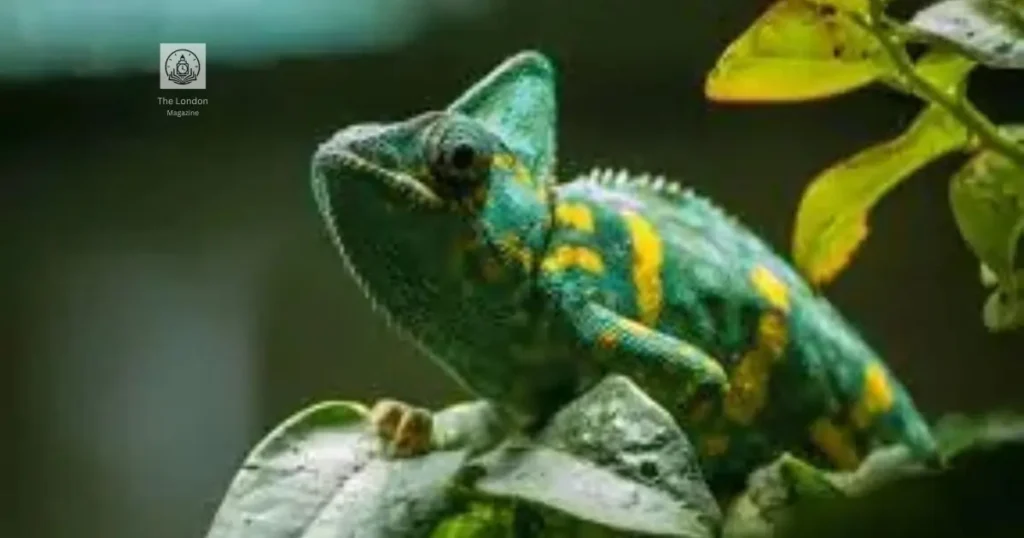
Chameleons are among the most biologically sophisticated reptiles on Earth. Belonging to the family Chamaeleonidae — part of the broader group known as Chameleónovité — they have evolved far beyond their reputation as color-changing novelties. With over 200 recognized species distributed across sub-Saharan Africa, Madagascar, the Middle East, and parts of southern Europe, they represent a diverse and ecologically complex clade of lizards shaped by tens of millions of years of evolution.
For readers curious about behavior, signaling, and instinct in other contexts, our complete guide to understanding Valplekar Puppy Play and behavioral dynamics offers a fascinating parallel look at how communication and instinct manifest across species.
Taxonomy and Global Distribution
The family Chamaeleonidae is divided into two subfamilies: Brookesiinae, which includes smaller, often ground-dwelling species, and Chamaeleoninae, the larger arboreal forms most people recognize. The chameleon lineage diverged from other lizards roughly 80–100 million years ago. Madagascar hosts nearly half of all known species, many of which are endemic to the island. Body sizes range from the thumbnail-sized Brookesia micra (under 30 mm) to Parson’s chameleon at over 68 cm, reflecting the extraordinary adaptive range within the Chameleónovité group.
Comparative Overview of Selected Chameleon Species
| Species | Length (cm) | Lifespan | Native Region | Notable Trait |
| Panther chameleon | 30–52 | 3–7 years | Madagascar | Vivid nuptial coloration |
| Veiled chameleon | 43–60 | 5–8 years | Yemen & Saudi Arabia | Prominent cranial casque |
| Meller’s chameleon | Up to 60 | 5–12 years | East Africa | Largest mainland species |
| Iberian chameleon | 20–35 | Up to 5 years | SW Europe & N Africa | Cold-adapted coloration |
| Parson’s chameleon | Up to 68 | 10–12 years | Madagascar | Longest-lived species |
Biology, Anatomy, and Physical Adaptations
Chameleons are precision-engineered for arboreal life. Their laterally compressed bodies reduce their profile among branches, while zygodactyl feet — toes fused into opposing pairs — provide an almost unbreakable grip. A fully prehensile tail acts as a fifth limb. Wildlife coverage in The London Magazine has long highlighted how such biomechanical precision reflects millions of years of co-evolution between animal form and forest environment.
Eyes and Tongue
Each eye rotates independently up to 180 degrees horizontally, allowing simultaneous monitoring of two fields of view. When prey is identified, both eyes converge for precise binocular depth perception. The tongue is equally remarkable: it extends to 1.5 times body length in under 0.07 seconds via a spring-loaded elastic mechanism, capturing prey weighing up to 30% of the animal’s body mass. Crucially, tongue performance depends on body temperature — a core reason chameleons bask before hunting.
The Color-Changing Mechanism
The popular idea that chameleons change color for camouflage is an oversimplification. In most species, color change is primarily a communication tool — conveying dominance, stress, reproductive state, and thermal condition. The mechanism involves layered skin cells: chromatophores carry pigment (yellow, red, and dark melanin), while the deeper iridophore layer contains guanine nanocrystals arranged in a geometric lattice. This is where the most spectacular changes occur across the Chameleónovité family.
Structural Coloration via Nanocrystals
When a chameleon is calm, the crystal lattice is tightly packed, reflecting shorter blue-green wavelengths. During excitement or arousal, crystals spread apart, shifting reflected light toward red and orange. Research published in Nature Communications (Milinkovitch et al., 2015) confirmed this physical mechanism, fundamentally reframing how scientists understand chameleon coloration. Melanophores modulate the display further: melanin dispersion darkens the skin and masks the iridophore signal entirely during stress.
Communication, Behavior, and Reproduction
Though largely solitary, chameleons maintain a sophisticated signaling system through color, posture, and lateral body compression. The Veiled chameleon (Chamaeleo calyptratus) from Yemen and Saudi Arabia displays bright yellow-green stripes during territorial assertion, while subordinate males rapidly shift to muted tones to signal submission. Females use distinct color patterns to communicate pregnancy and reject unwanted mating attempts.
Sexual dimorphism is pronounced in many species. Male Panther chameleons (Furcifer pardalis) display dramatically more intense coloration than females, and color morphs vary geographically across Madagascar. Most chameleons are egg-laying, with clutch sizes ranging from 2 to 200 eggs. A subset — including Jackson’s chameleon — gives birth to live young, demonstrating reproductive flexibility across the family.
Habitat, Ecology, and Diet
Most chameleons are obligate arboreal animals, structuring their activity around the vertical layers of shrubs and forest canopies. Different species occupy different height zones within the same habitat, reducing competition. Ground-dwelling Brookesia species represent a secondary return to the forest floor, where they mimic dead leaves with striking fidelity. Water intake typically occurs by licking condensation from leaves, making chameleons highly sensitive to humidity changes.
Chameleons are primarily insectivorous, targeting locusts, crickets, beetles, and similar invertebrates. Larger species such as Meller’s chameleon (Trioceros melleri) — the biggest chameleon found outside Madagascar, native to Tanzania, Malawi, and Mozambique — also take small vertebrates, including lizards and birds. This dietary flexibility reflects the energetic demands of a large-bodied predator in a competitive ecosystem.
Conservation Status and Threats
More than a third of assessed chameleon species are listed as threatened on the IUCN Red List. Habitat destruction through slash-and-burn agriculture and logging is the primary driver, particularly in Madagascar. The global pet trade exerts additional pressure, especially on visually striking species. Climate change compounds both threats: because chameleons are ectothermic and microclimate-sensitive, even modest temperature and humidity shifts reduce reproductive success and immune function in fragmented populations.
The Iberian chameleon (Chamaeleo chamaeleon), Europe’s only native chameleon species, faces growing pressure from coastal development and tourism across its range in the Iberian Peninsula and North Africa. Conservation responses include protected area management, CITES-regulated trade controls, and captive breeding programs — though enforcement gaps and economic pressures continue to undermine progress across much of the Chameleónovité family’s range.
Conclusion
Chameleons are a study in biological precision — from nano-scale crystal arrays that shift light wavelengths to tongue mechanics that outpace the human blink. As members of the Chameleónovité family, they communicate through color, navigate through independent vision, and reproduce across a remarkable range of strategies. Understanding them fully and protecting what remains of their increasingly fragile habitats are both a scientific priority and a conservation imperative.
Frequently Asked Questions
Do chameleons change color mainly for camouflage?
No. Color change primarily signals mood, dominance, stress, and reproductive status to other chameleons. Camouflage is a secondary function, more relevant in naturally cryptic species.
How fast is a chameleon’s tongue strike?
It extends to full length in under 0.07 seconds, reaching speeds of up to 26 body lengths per second — fast enough to capture prey weighing up to 30% of the animal’s body mass.
Are all chameleons tropical?
No. The Iberian chameleon survives in cooler Mediterranean climates, and some Brookesia species tolerate near-freezing highland temperatures in Madagascar.
Why do chameleons move so slowly?
Their rocking gait mimics wind-blown foliage, reducing detection by predators and prey. It also conserves energy during the patient stalking required before a tongue strike.
How many chameleon species exist?
Over 200 recognized species have been described, with new ones still being discovered. Madagascar hosts approximately half, most of them endemic and increasingly under threat.


