



Celebrities Latest

Sean Hughes’ £4m Estate Finally Goes to Charity After Legal Battle

Sean Hughes’ £4m Estate Finally Goes to Charity After Legal Battle
  • PublishedMarch 18, 2026

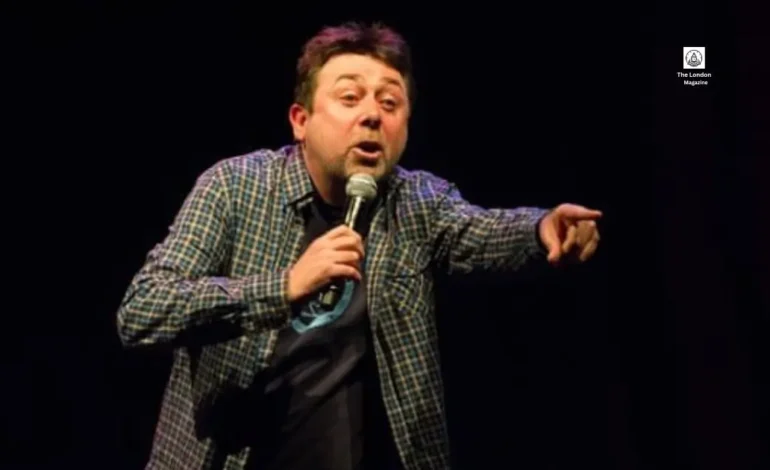
According to The London Magazine, the late comedian Sean Hughes’ £4 million estate has finally been awarded to the homelessness charity Shelter after a decade-long legal saga involving an ambiguous handwritten will. The resolution, confirmed by the High Court, marks the end of a protracted legal battle and fulfils the charitable wishes Hughes expressed before his untimely death in October 2017 at the age of 51.

Why This Story Matters

The case attracted attention across legal, entertainment, and charity sectors, highlighting the complexities of handwritten wills and properties held via companies in the UK. For followers of inheritance law, it remains a key reference.

Beyond legal matters, Hughes’ generosity stands out. Friends like Hughes Richard recall his commitment to helping others, and leaving his estate to Shelter deepened public admiration for the beloved comedian.

A Decade in the Making

From his death in 2017 to the High Court’s confirmation, the estate transfer spanned nearly ten years. Shelter worked closely with the Hughes family and legal teams to resolve ambiguities in his handwritten will.

The outcome demonstrates that clear charitable intent, even in imperfect documents, can be honoured, highlighting Hughes’ enduring impact on both comedy and UK charity law.

For more insights into iconic figures in entertainment, Visit: Remembering Burt Thicke – Iconic Roles & Career — an in-depth look at another beloved entertainer whose cultural legacy continues to resonate with audiences worldwide.

Background of Sean Hughes

Sean Hughes was born on 5 April 1965 in London, England, to Irish parents, and grew up deeply connected to both his British surroundings and his Irish heritage. His father, Brian Hughes, was a jockey of some local renown, a connection that lent a working-class authenticity to the comedian’s down-to-earth stage persona. His sister, Amber Lee Hughes, remained close to him throughout his life, and family played a central role in his personal identity.

Early Life and Irish Heritage

Hughes’ Irish roots were not merely biographical footnotes; they were central to his comedic identity. The Irish literary tradition — with its emphasis on wordplay, melancholy, and darkly comic observation — permeated his writing and performance style in ways that distinguished him sharply from his contemporaries. Growing up between two cultural identities gave Hughes an outsider’s perspective that became the engine of his comedy.

He discovered his love of performance and literature at a young age, drawn particularly to music and poetry as vehicles for emotional expression. These twin passions would define both his comedy and his later media work, as he became one of the more intellectually curious voices in British entertainment.

Family Connections and Influences

His father, Brian Hughes, the jockey, instilled in Sean a respect for quiet determination and working-class resilience. His sister, Amber Lee Hughes, remained a close confidante, and those who knew the family have spoken of a household that prized wit, warmth, and a certain wry acceptance of life’s absurdities. These early family dynamics left a clear imprint on the persona Hughes brought to the stage.

Rise to Comedy Fame

Hughes rose to prominence in the late 1980s and early 1990s as a stand-up comedian with a distinctly introspective and literary sensibility. Unlike many of his peers who relied on loud observational humour, Hughes crafted a melancholy wit that resonated deeply with audiences. His comedy drew comparisons to alternative scenes emerging across Ireland and Britain, and much like Twiggy’s memorable turn in The Royle Family demonstrated how beloved cultural figures can reinvent themselves, Hughes continually defied easy categorization.

The Edinburgh Festival and Breakthrough Years

The Edinburgh Festival Fringe was the crucible in which Hughes’ talent was first widely recognised. His early appearances at the festival generated significant industry buzz, as critics and fellow comedians noted his unusual combination of vulnerability and precision. The festival circuit gave him the platform to develop a full-hour show that would ultimately secure him the Perrier Award in 1990.

Sean’s Show and Channel 4 Success

The transition from live stand-up to television was managed with considerable creative ambition. Sean’s Show, which aired on Channel 4 between 1992 and 1993, was a genre-defying blend of stand-up, sitcom, and personal narrative. It earned a BAFTA nomination and introduced him to a mainstream television audience, while retaining the intimate, confessional tone that had made his live shows so distinctive.

Career Achievements

In 1990, at just 24 years of age, Hughes became the youngest-ever recipient of the Perrier Comedy Award at the Edinburgh Festival Fringe, a distinction that announced him as one of the most exciting new voices in British comedy. The award remains one of the most prestigious in live performance, and winning it at such a young age cemented his status as a genuine talent. His upbringing, influenced by his father, Brian Hughes, a jockey, contributed to his grounded personality and work ethic, which shaped his approach to comedy.

Never Mind the Buzzcocks

Hughes became a beloved regular on Never Mind the Buzzcocks, the BBC Two music panel show, where he served as a team captain from 1996 to 2002. His sardonic wit and encyclopaedic music knowledge made him a standout presence on the programme alongside fellow panellists, including Phill Jupitus and host Mark Lamarr. He remains fondly remembered by fans of the show as one of its most characterful contributors.

Radio, Writing and Later Career

Beyond television, Hughes appeared frequently on BBC 6 Music radio programmes, cementing his reputation as a credible voice in music commentary. He also worked as an author, publishing the novel The Detainees in 1999, a work of fiction that drew on themes of loneliness and modern urban life. His career demonstrated a range and intellectual curiosity that few comedians of his generation matched, extending well beyond the panel show circuit into genuinely literary territory.

Stand-Up Tours and Live Work

Throughout the 1990s and 2000s, Hughes continued to perform live stand-up across the UK and Ireland. His touring shows evolved considerably over the years, becoming more personal and less reliant on traditional joke structures. Later shows drew heavily on autobiography, exploring his experiences of ageing, loss, and the peculiar loneliness of the working comedian — themes that resonated deeply with audience members who had followed his career from the beginning.

Personal Life & Family

Despite his public success, Sean Hughes maintained a relatively private personal life. He never married and had no children, which made the question of his estate’s beneficiary all the more significant following his death. He owned three properties in Crouch End, North London, reflecting his long-standing connection to that part of the capital.

His Homes in Crouch End

Glasslyn Road (valued at approximately £1.8 million) was his primary personal residence, a property he had owned for many years and where he spent much of his private life. He also owned two further properties held through a limited company: Edison Avenue (valued at £1.5 million) and Elder Avenue (valued at £650,000). Together, these three Crouch End properties formed the bulk of his £4 million estate.

Values, Beliefs and Charitable Intent

Those who knew Hughes described a man of considerable generosity, who harboured deep concern for social inequality and particularly the plight of those without stable housing. His decision to leave his estate to Shelter was consistent with the values he espoused throughout his life. Friends have noted that Hughes spoke frequently about the injustice of homelessness in London and across the UK, and that his commitment to the cause was heartfelt rather than performative.

The Legal Battle Over His Estate

When Sean Hughes passed away on 16 October 2017 following liver failure, the contents of his handwritten will quickly became a matter of legal dispute. The document expressed a clear charitable intent, but its handwritten nature and certain ambiguous phrasing created interpretive challenges that necessitated intervention from the courts. Friends and colleagues, including entertainers familiar from shows like Eddie Yates Coronation Street, noted the importance of resolving the estate properly to honour Hughes’ intentions.

The Handwritten Will – What Went Wrong

In England and Wales, a handwritten or ‘holographic’ will is legally valid provided it meets certain conditions: it must be written entirely by the testator, signed, and witnessed appropriately. Hughes’ will satisfied the basic formal requirements, but the language used to describe the intended beneficiary and the assets to be transferred was not sufficiently precise to enable a straightforward execution of the estate.

Ambiguities That Required Court Interpretation

Legal practitioners reviewing the will identified several passages where the intended meaning could be interpreted in more than one way. In particular, the relationship between Hughes’ personally held assets and those held through a limited company was not explicitly addressed, creating uncertainty about whether all three properties — or only the one held in his personal name — were intended to pass to Shelter.

The court was therefore required to apply principles of will construction, examining the document as a whole and considering the testator’s evident intentions to reach a legally sound interpretation. This process, while time-consuming, ultimately confirmed that Hughes had indeed intended all three properties to benefit the charity.

The Role of the High Court and Master Iain Pester

The case was presided over by Master Iain Pester of the High Court, who was tasked with determining the proper legal interpretation of the will and confirming the transfer of assets. Master Pester’s role was not to override the will, but to clarify its meaning in light of the legal complexities presented by the corporate ownership structure.

How Company Shares Complicated the Transfer

Two of the three properties — Edison Avenue and Elder Avenue — were not held directly in Hughes’ personal name but through a limited company. This corporate structure, while common in property investment, created a significant legal hurdle. A standard inheritance of property held personally is relatively straightforward; inheriting property held through a company requires a different legal mechanism entirely.

The court ultimately approved the transfer of the company shares themselves to Shelter, thereby giving the charity effective ownership and control of the properties held within the corporate structure. This approach required careful legal drafting and court approval at each stage, contributing to the length of the proceedings.

Timeline of the Legal Proceedings

The legal process began shortly after Hughes’ death in October 2017 and continued for the better part of a decade. Initial reviews of the will identified the ambiguities that would require court resolution. Subsequent stages involved expert legal submissions, documentary evidence, and the collaboration of the Hughes family, who were committed to ensuring their brother’s final wishes were fulfilled. The High Court’s eventual ruling provided definitive clarity on the interpretation of the will and authorised the full transfer of the estate to Shelter.

Significance for UK Charitable and Estate Law

The Hughes case has attracted commentary from estate law specialists across the UK, who note its relevance as a practical illustration of the risks associated with informally drafted wills. While the outcome was ultimately consistent with Hughes’ intentions, the decade-long process and the legal costs incurred underline the importance of professional guidance when drafting documents of this complexity.

For charities in particular, the case highlights the importance of maintaining clear communication with potential benefactors, and of being prepared to engage in extended legal processes when estates involve non-standard asset structures.

Summary of Sean Hughes’ Property Estate

PropertyLocationValueOwnership TypeBeneficiary
Glasslyn RoadCrouch End, London£1.8mPersonalShelter
Edison AvenueCrouch End, London£1.5mCompany SharesShelter
Elder AvenueCrouch End, London£650kCompany SharesShelter

Impact of the Donation

The resolution of Sean Hughes’ estate case delivers a substantial financial contribution to Shelter at a moment of acute need. According to the 2025 UK Housing Report, over 280,000 people in England are currently experiencing homelessness, a figure that encompasses rough sleepers, those in temporary accommodation, and households in unstable housing situations.

Who Is Shelter and What Do They Do?

Shelter is one of the United Kingdom’s most prominent homelessness charities, operating since 1966. The organisation provides emergency advice and support to individuals and families facing homelessness, runs a national helpline, offers free legal support to those facing eviction, and conducts sustained campaigning work to influence government housing policy. Their reach is considerable: in any given year, Shelter assists hundreds of thousands of people across England and Scotland.

How the £4 Million Will Be Used

A donation of this magnitude — approximately £4 million in property assets — represents a transformative injection of resources into Shelter’s operational capacity. The charity has indicated its intention to deploy the proceeds responsibly across its frontline services, including its national advice helpline, its network of local services, and its legal support programmes for individuals facing eviction or housing crisis.

Property-based donations of this scale also offer Shelter strategic flexibility, as the assets can be liquidated over time to fund longer-term programmes, or held as investment assets generating income to support sustained operational work.

The Homelessness Crisis in Context

The scale of homelessness in England in 2025 makes donations of this kind not merely welcome, but urgently necessary. The 2025 UK Housing Report identified a dramatic increase in the number of households presenting as homeless to local authorities, driven by the convergence of rising rents, elevated mortgage rates, and a chronic shortage of social housing stock. The gap between need and provision has widened considerably in recent years, placing enormous pressure on organisations such as Shelter.

London’s Particular Housing Challenges

As a resident of North London for much of his adult life, Hughes would have been acutely aware of the housing pressures facing the capital. London accounts for a disproportionate share of England’s homelessness figures, driven by the world’s most competitive private rental market and a severe shortage of affordable accommodation. The three Crouch End properties that formed his estate sit within a borough where average property prices have risen dramatically over the past two decades, making Hughes’ decision to direct this wealth towards a housing charity all the more pointed.

The Hughes Family’s Role in the Resolution

Throughout the legal proceedings, members of the Hughes family played a constructive and cooperative role, working with Shelter’s legal team to ensure the process moved towards a conclusion consistent with Sean’s evident wishes. Their involvement was essential in providing contextual evidence of his charitable intentions and in facilitating the administrative steps required to execute the estate transfer.

Shelter has publicly acknowledged the family’s contribution to the successful resolution of the case, noting that their goodwill and cooperation significantly eased a process that could have been substantially more protracted had there been disagreement about the intended beneficiary.

Legacy and Remembering Sean Hughes

The legacy of Sean Hughes is one that extends well beyond the television programmes and award ceremonies that marked his professional ascent. Those who worked with him consistently describe a performer of rare emotional intelligence, whose comedy functioned as a vehicle for deeper truths about loneliness, identity, and the human condition.

His Influence on British Comedy

Hughes’ influence on subsequent generations of comedians has been quietly but consistently acknowledged. Several performers who came of age watching Never Mind the Buzzcocks and Sean’s Show have cited Hughes as a formative influence, particularly those drawn to introspective or literary modes of comedy. His willingness to bring vulnerability to the stage helped pave the way for a more emotionally honest strand of British stand-up that has flourished in the years since his death.

Mentorship and Support for Younger Comedians

Behind the scenes, Hughes was known as a supportive and encouraging presence for younger comedians navigating the industry. Those who encountered him early in their careers have spoken of his generosity with time and advice, and his genuine interest in the work of emerging performers. This mentorship, largely invisible to the public, represents another dimension of a legacy that extended well beyond his own performances.

His Literary and Musical Sensibility

Few comedians of his era bridged the worlds of literature, music, and comedy as naturally as Hughes did. His novel, his radio work, and his panel show appearances all reflected a curiosity and cultural breadth that was genuinely unusual. In an industry that often rewards narrow specialisation, Hughes pursued a more expansive creative life, and the quality of his output across multiple disciplines was consistently high.

His Irish Heritage and Cultural Legacy

His Irish heritage, which informed much of his sensibility as a performer, also connects him to a broader tradition of Irish literary and comedic talent that has enriched British cultural life for generations. Writers and comedians from Samuel Beckett to Dylan Moran have drawn on the same well of melancholy wit and linguistic precision that characterised Hughes’ best work. In this context, his legacy is both personal and cultural, part of a living tradition that continues to shape contemporary British and Irish comedy.

Remembering Sean Hughes in Popular Culture

In the years since his death, tributes from colleagues, fans, and critics have consistently emphasised the same qualities: warmth, wit, intellectual depth, and an unusual capacity for honest emotional expression. Retrospective screenings of Sean’s Show and clip compilations from Never Mind the Buzzcocks attract consistent engagement online, suggesting that his work continues to find new audiences and that his comic instincts remain as sharp and relevant as ever.

Conclusion

Sean Hughes’ charitable legacy through his £4m estate highlights both his generosity and enduring influence on comedy, ensuring his contributions continue to support vital causes for years to come. The resolution of the decade-long legal battle over his handwritten will marks a meaningful conclusion to a remarkable life, and stands as a testament to the power of personal conviction — even when tested by the complexities of law.

Frequently Asked Questions

Who inherited Sean Hughes’ estate?

All three of Sean Hughes’ properties were transferred to Shelter, the homelessness charity, following High Court approval of his handwritten will.

Why did Sean Hughes’s will go to court?

Ambiguities in his handwritten will required the High Court to confirm the proper interpretation of his estate and company-owned properties.

How much was Sean Hughes’ estate worth?

His estate was valued at approximately £4 million, including three properties in Crouch End, North London.

What TV shows did Sean Hughes appear in?

Sean Hughes was known for Never Mind the Buzzcocks, Sean’s Show, and appearances on BBC 6 Music radio programmes.

Who were notable colleagues or friends of Sean Hughes?

Friends and colleagues included Phill Jupitus, Mark Lamarr, and younger comedians he mentored throughout his career.

Written By
The London Magazine

The London Magazine is an online publication sharing real stories and insights from across the world of celebrities, lifestyle, sports, travel, and business. Our goal is to inform and inspire readers with fresh, well-written articles that highlight trends, experiences, and real moments that matter. We focus on authentic storytelling from the latest celebrity updates and lifestyle ideas to travel inspirations and business insights all brought together in one modern magazine.

Leave a Reply

Your email address will not be published. Required fields are marked *