
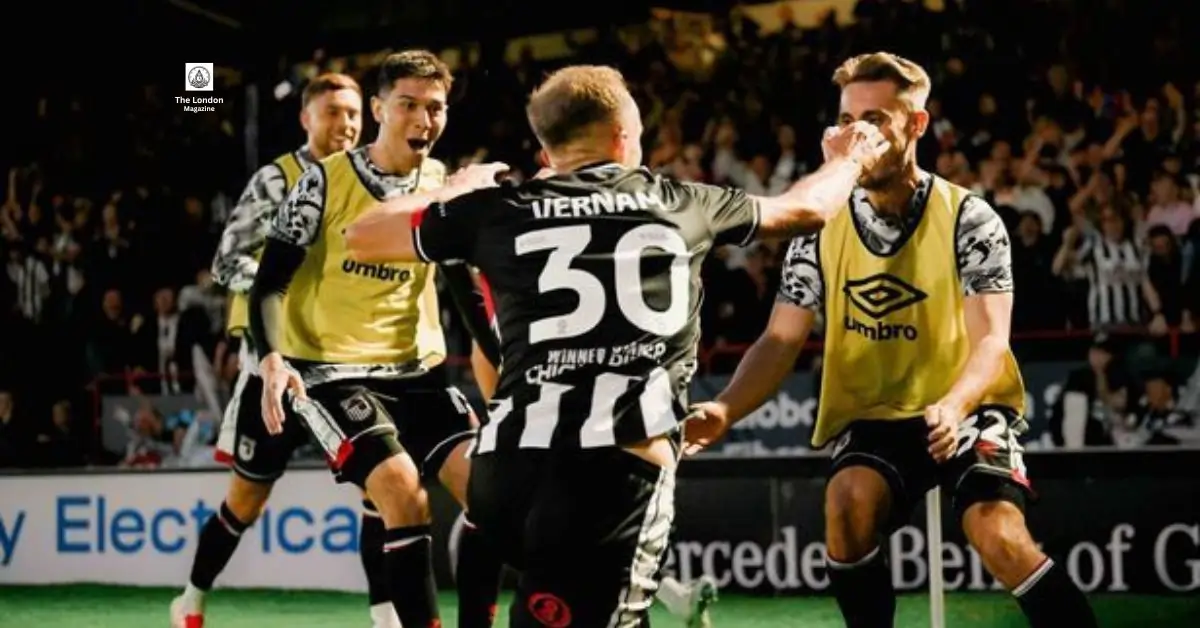


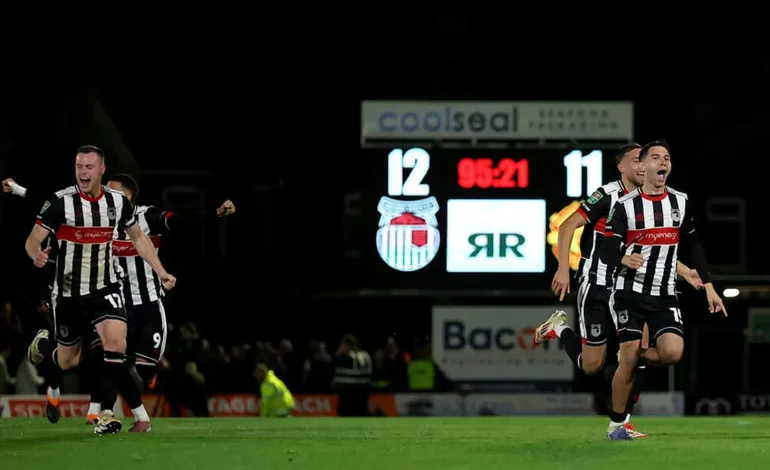

There are upsets, and then there are moments that rewrite a club’s entire story. What happened at Blundell Park on August 27, 2025, was the latter. Grimsby Town — a fourth-tier club with a 9,000-capacity ground and academy graduates in the XI — knocked Manchester United out of the EFL Cup on penalties. Not just knocked them out, but outthought them tactically and outlasted them mentally in a shootout that went all the way to 12-11. As noted in this analysis by The London Magazine.
The Grimsby Town vs Manchester United F.C. lineups said everything before kick-off. Amorim rotated heavily. Artell picked his strongest side. One manager was managing a squad; the other was chasing history. That contrast defined the entire evening.
Match Overview
It was the first competitive meeting between the two clubs since 1948, which tells you everything about how different their paths have been. United had finished 15th in the Premier League the previous season and lost the Europa League final to Tottenham. Arriving here winless in two league games. Grimsby, by contrast, were unbeaten in six, sitting fourth in League Two, and had won every home match so far that season, according to Sports Mole.
United went 2-0 up inside thirty minutes. It looked done. Then Grimsby equalised in the 89th minute, took it to penalties, and won 12-11 — one of the great cup shocks in English football history.
Grimsby Town Lineup & Tactical Setup
Formation: 4-1-4-1 Starting XI: Christy Pym; Harvey Rodgers, Tyrell Warren, Cameron McJannet, Jayden Sweeney; George McEachran; Darragh Burns, Kieran Green, Evan Khouri, Charles Vernam; Cameron Gardner
Why Artell Picked His Best Team
There was no rotation, no experimentation. Artell named what was essentially his first-choice League Two lineup and made his intentions clear from the off — Grimsby were here to win. Sam Lavelle and Jason Svanthorsson were absent through injury, but the manager worked around it without changing his approach.
How the 4-1-4-1 Was Designed to Hurt United
The formation had a clear purpose: pack the central areas, cut off United’s attacking midfielders, and hit them on the break through Vernam and Burns in wide positions.
McEachran as the Key Man
George McEachran — a former Chelsea academy midfielder who joined Grimsby ahead of the 2024-25 season — was the linchpin. Deployed as the single pivot, his job was to screen the back four, win second balls, and stop United from playing through the middle. He did all three, consistently and quietly, for the entire ninety minutes. For a League Two player, his composure on the night was remarkable.
Manchester United Lineup & Rotation Strategy
Formation: 3-4-2-1 Starting XI: André Onana; Tyler Fredricson, Harry Maguire, Ayden Heaven; Diogo Dalot, Kobbie Mainoo, Manuel Ugarte, Patrick Dorgu; Amad Diallo, Matheus Cunha; Benjamin Šeško
The Problem With Rotating Without Cohesion
Amorim made wholesale changes, looking to hand minutes to players who needed game time, Sports Mole. Logical on paper. Costly in practice. Fredricson and Heaven — talented but inexperienced — flanked Maguire in a back three that requires constant communication to function. The wing-backs pushed high. The midfield pressed inconsistently. The whole shape felt like players learning their roles rather than executing them.
What Happened to the Attack
United’s attack featured £200 million worth of new signings in Šeško, Cunha, and Mbeumo, ESPN — and yet it rarely clicked. Šeško was isolated up front. Cunha drifted in and out of the game. Amad showed flashes but couldn’t sustain it. The individual quality was there. The collective understanding wasn’t, and against a well-organised defensive block, you need both.
Tactical Analysis – Where the Game Was Really Decided
This is the part that gets lost in the headline. Grimsby didn’t just get lucky — they were tactically superior for large parts of this match, which is a sentence that deserves to sit on the page for a moment.
The tactical blueprint here mirrors what we’ve seen in other recent cup shocks, including the Aston Villa vs Newcastle FA Cup Match, where a well-drilled defensive structure neutralised superior individual quality at a crucial moment.
How Grimsby Shut United Down
The Mid-Block That Worked Perfectly
Grimsby didn’t sit deep and hope. They defended in a mid-block — meaning they held their shape in the middle third, forced United wide, and only dropped deeper when United entered the final third. It’s a disciplined, intelligent way to defend against a team with technically gifted attacking midfielders. And it worked because United’s wide options weren’t good enough to break it down consistently.
Pressing With a Plan
When United’s centre-backs had the ball, Gardner applied just enough pressure to force decisions — not enough to open gaps. That restraint is harder to coach than an all-out press. It kept Grimsby’s shape intact while still putting United under low-level discomfort throughout.
Where United Fell Apart
The Half-Spaces Dried Up
Cunha and Amad needed space between Grimsby’s defensive and midfield lines to operate. Grimsby’s shape denied them that space almost entirely. Without it, neither player could influence the game, and Šeško was left to win aerial duels without support, which isn’t how he works best.
The Back Three Wasn’t Ready
Amorim’s system demands that all three centre-backs are in sync — on press triggers, on when to step out, on how to cover for advancing wing-backs. Fredricson and Heaven are developing players. Maguire is experienced but couldn’t compensate for two partners still learning the system. As Grimsby’s intensity grew in the second half, the gaps between United’s lines widened, and the whole defensive structure looked increasingly fragile.
Key Moments & Turning Points
The First Half — United’s False Comfort
Two goals in thirty minutes looked decisive. Šeško caused Grimsby genuine problems physically in this period, and United moved the ball with enough purpose to suggest they were in control. But they weren’t pressing the way Amorim’s system demands, and Grimsby were already finding their feet.
The Second Half — The Shift in Momentum
Artell made subtle adjustments at half-time — sharper press triggers, more direct running in behind. United’s shape began to creak. The crowd grew louder. United’s players, without the familiarity of a settled unit, started making individual errors that a more cohesive team wouldn’t have made.
89th Minute — The Moment Everything Changed
The equaliser didn’t just level the score. It broke United psychologically. A squad that had been coasting suddenly faced extra time against a team running on pure belief and adrenaline. That’s a completely different game — and United weren’t equipped to play it.
The Shootout — Composure Wins
Onana saved Oduor’s penalty. Cunha missed for United. Then Mbeumo hit the crossbar, and fans poured onto the pitch. ESPN: Twenty-three penalties. 12-11. As Kieran Green said afterwards: “Going into the shootout, the gaffer told us all the pressure is on them — and it really was.” ESPN: That’s not just a quote. That’s a tactical and psychological reality that Grimsby had engineered across ninety minutes.
Match Stats & What They Actually Mean
| Stat | Grimsby | Man Utd |
| Possession | ~38% | ~62% |
| Shots | 9 | 16 |
| Shots on Target | 4 | 6 |
| Result | W (pens) | L |
Reading Beyond the Numbers
United had more of everything — possession, shots, corners. But look at where those shots came from. The vast majority were from wide areas or outside the box — exactly the positions Grimsby were happy to allow. Forcing your opponent to shoot from poor positions isn’t passive defending; it’s active tactical management. Grimsby did it brilliantly.
Grimsby’s nine shots, by contrast, came at better moments, in better areas, with better timing. The 89th-minute equaliser came from exactly the kind of transition Artell had designed his shape to produce.
Player Highlights
George McEachran — Grimsby’s Tactical Brain
The best player on the pitch by the metric that matters most: doing exactly what his team needed, for the entire match, without fuss. His positioning as the single pivot was consistently intelligent. He broke up United’s build-up play, kept Grimsby’s shape tight, and recycled the ball calmly under pressure. A League Two player outperforming a Premier League midfield — that’s the story of the night in one player.
Harry Maguire — Quality in Isolation
Maguire’s goal to force extra time was a reminder of what he can offer. But he was fighting a losing battle structurally — a veteran leader surrounded by inexperienced partners in a system that needs everyone to be on the same page. His performance wasn’t poor; his circumstances were.
Kieran Green — The Heartbeat of the Upset
Industrious, tactically disciplined, and increasingly influential as the match wore on. Green led Grimsby’s second-half press and drove them forward in moments when belief could have wavered. His post-match composure reflected exactly how settled Grimsby’s dressing room had felt from the first whistle.
What This Result Means Going Forward
For Grimsby Town
This is the biggest result in the club’s modern era, full stop. It’s not just about the scoreline — it’s about what it proves. A League Two club with academy graduates in the team, working within their budget, beat a club that spent more on three attackers than Grimsby has spent in their entire recent history. That tells you everything about the culture, organisation, and coaching quality at Blundell Park right now. The confidence boost going into their League One promotion push is immeasurable.
For Manchester United
This is the first time in United’s history that they’ve been knocked out of a domestic cup by a fourth-tier club, ESPN — a historically low point by any measure. For Amorim, it’s a third game without a win and a clear signal that rotation without cohesion is a dangerous game in knockout football. The EFL Cup was one of the most accessible routes to silverware this season. It’s gone in the second round. The deeper issue — a squad that can’t hold a two-goal lead against League Two opposition — won’t be solved by tactics alone.
Conclusion
The Grimsby Town vs Manchester United F.C. lineups reflected two completely different priorities — and the result reflected that. Artell picked his best team, built a clear tactical plan, and his players executed it. Amorim rotated, fielded a group still learning each other, and paid the price.
Grimsby didn’t get lucky. They were better organised, better prepared, and mentally stronger when it counted. Structure and belief beat talent and price tags — and that’s a lesson that applies well beyond one night in Cleethorpes.
Frequently Asked Questions
What were the confirmed Grimsby Town vs Manchester United F.C. lineups?
Grimsby: Pym; Rodgers, Warren, McJannet, Sweeney; McEachran; Burns, Green, Khouri, Vernam; Gardner — in a 4-1-4-1. United: Onana; Fredricson, Maguire, Heaven; Dalot, Mainoo, Ugarte, Dorgu; Amad, Cunha; Šeško — in a 3-4-2-1.
Why did Manchester United lose to Grimsby?
Rotation without cohesion. United’s system requires deep familiarity to function, and a heavily changed lineup lacked it. Grimsby’s defensive structure neutralised United’s attack, and the team couldn’t hold a 2-0 lead against a side playing for their lives.
How did Grimsby win?
2-2 after 90 minutes following a late equaliser. The shootout went to 12-11, with Bryan Mbeumo hitting the crossbar with the decisive penalty.
What made Grimsby’s 4-1-4-1 so effective?
It compressed central space, denied United’s attacking midfielders room to operate, and created the platform for dangerous transitions. George McEachran’s role as the single pivot was central to it all.
What are the implications for Manchester United?
A historically bad cup exit, a third game without a win, and serious questions about squad cohesion and system dependency — all within the first month of the season.