




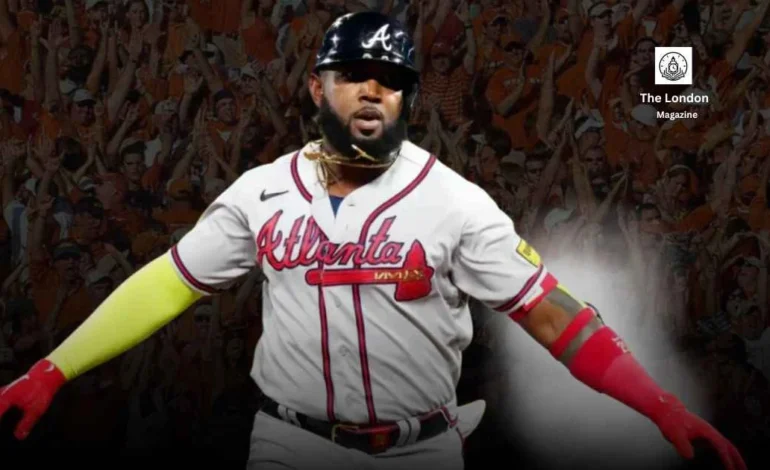

If you searched “Braves Marcell Ozuna waiver candidate” expecting a straight answer, you’re not alone. The phrase exploded across Braves Twitter, Reddit, and sports radio throughout 2025, fueled by declining stats, an expensive contract, and a franchise in transition. By early 2026, the story had a definitive ending — just not the one many fans expected.
Ozuna was never placed on waivers. His contract expired naturally, Atlanta chose not to re-sign him, and he landed in Pittsburgh on a one-year deal. But the speculation itself told a larger story about how MLB teams manage aging, high-salaried designated hitters. Here’s the complete, data-backed picture.
Was Marcell Ozuna actually a waiver candidate in 2026?
No. The Atlanta Braves never officially placed Ozuna on waivers. The label was media and fan speculation driven by his declining 2025 production (.248 AVG, .741 OPS) and a $16M salary. His contract expired after 2025, Atlanta declined to re-sign him, and he signed a one-year, $12M deal with the Pittsburgh Pirates in February 2026.
Why Is This Topic Trending Right Now?
The search term didn’t appear out of nowhere. Three specific triggers lit the fuse.
Trigger 1 — Bleacher Report Named Him a Waiver Candidate
Analyst Kerry Miller’s widely circulated piece explicitly called Ozuna a waiver candidate during the second half of 2025, citing his declining exit velocity, rising strikeout rate, and defensive limitations. It spread across every major Braves fan community within 48 hours and permanently lodged the phrase in search behavior.
Trigger 2 — The Braves’ Unexpected 2025 Collapse
Atlanta entered 2025 as NL East favorites. By midsummer, they were out of playoff contention, and the conversation shifted from “how far can we go?” to “who do we move?” Ozuna’s $16M price tag for a non-defensive DH became an obvious pressure point in that environment.
Trigger 3 — The Jurickson Profar Situation
When Profar received a 162-game suspension in spring 2026, it reignited old speculation about whether Atlanta had handled the DH slot correctly. That research surge is a large part of why this topic is still pulling traffic in April 2026.
Marcell Ozuna’s 2025 Performance Breakdown
This is where the waiver narrative finds its legitimate foundation. Ozuna’s 2025 numbers were a genuine step back from his 2023–2024 peak.
Three-Year Statistical Comparison
| Metric | 2023 | 2024 | 2025 |
| Batting Average | .274 | .303 | .248 |
| Home Runs | 40 | 39 | 21 |
| RBI | 100 | 103 | 78 |
| OPS | .889 | .914 | .741 |
| ISO | .230 | .220 | .178 |
| WAR | 3.1 | 3.4 | 1.2 |
| Games | 151 | 149 | 142 |
What the Numbers Actually Tell Us
The power drop is the most alarming line. Going from 39–40 home runs to 21 is a 46% decline in the most valuable statistic for a player whose only job is to hit. His ISO fell to .178 — the lowest full-season mark since his early career — and his OPS dropped 173 points in a year where NL DH average OPS sat at .765.
The Hip Injury Factor
The hip issue that sidelined him for extended stretches in July was a real mitigating factor. But Atlanta’s front office still had to ask: is this an injury year, or the start of an age-related decline curve for a 34-year-old with zero defensive value?
The Late-Season Surge
After returning from the injury, Ozuna slashed .314/.457/.829 with six homers over 12 games. Optimists saw a bounce-back candidate. Skeptics saw a small sample masking structural decline. Both arguments carried weight heading into free agency.
Why He Was Called a “Waiver Candidate” — The Real Analysis
The label was analytically grounded, even if the actual transaction never happened. Four factors drove the legitimate conversation.
1. Salary vs. Production Mismatch
Ozuna’s four-year, $65M extension (signed March 2022) carried an AAV of $16.25M. In 2025, he delivered just 1.2 WAR. At the industry-standard $8–9M per WAR valuation, he was producing roughly $10–11M in value against a $16M obligation — a $5–6M annual gap absorbed by a team already near the Competitive Balance Tax threshold.
2. The Luxury Tax Mechanic Most Coverage Missed
Placing Ozuna on outright waivers would not have given Atlanta any payroll relief. MLB’s CBT calculation treats released player salaries as active payroll — the Braves would have owed the full $16M regardless of whether another team claimed him. The only clean exit was letting the contract expire naturally, which is exactly what happened.
Why This Mechanic Changes Everything
This single rule explains why the actual waiver move was always impractical. Teams almost never place expensive veterans on outright waivers mid-contract because the financial relief is zero. “Waiver candidate” made for compelling headlines but poor roster economics.
3. Positional Inflexibility
Ozuna played just 14 outfield innings across his final three Braves seasons — all in the opening week of 2023. As a pure DH with no defensive value and limited baserunning ability, he was always the first player examined when a team needed to maximize roster versatility.
4. Exit Velocity and Statcast Decline
His average exit velocity trended downward through 2024–2025, and his barrel rate dropped into the single digits. These are not numbers that bounce back easily for a 34-year-old recovering from a hip injury — and the front office understood that.
Atlanta’s Roster Situation — Deep Analysis
The DH Slot Economics
Under Alex Anthopoulos, Atlanta treats the DH spot as a roster management tool — used to rest Matt Olson, give Ronald Acuña Jr. an outfield breather, or rotate Sean Murphy off catching duty. Locking that slot to a single full-time DH eliminates that flexibility entirely. The cumulative health benefit across an entire lineup, compounded over 162 games, outweighs what Ozuna’s 2025 numbers were delivering.
Internal Replacement Options
Atlanta’s 2026 DH depth runs through a rotating committee. Drake Baldwin factors into the mix on his non-catching days. Cal Conley provides switch-hitting versatility off the bench.
The Honest Replacement Ceiling
The relevant comparison isn’t 2023 Ozuna — it’s 2025 Ozuna: 21 HR, .741 OPS, 1.2 WAR at $16M. The Braves bet that a committee approach would match that output while freeing up $14–16M for pitching upgrades elsewhere on the roster.
The Championship Window Context
Anthopoulos confirmed publicly that Atlanta’s core — Acuña, Olson, Albies, and a deep rotation — remains under contract or team control through 2028. This wasn’t a panic move. It was clean organizational rationalization within a stable, championship-caliber framework.
For a similar evidence-based framework applied to how team decisions hold up under match pressure, see The London Magazine’s Grimsby Town vs Crewe Alexandra Match Analysis.
Realistic Scenarios — What Could Have Happened
Scenario 1 — He Stays in Atlanta
This required either a dominant late-season push or a thin DH free-agent market. Neither materialized sufficiently. Atlanta would have retained proven right-handed power but paid a $16M premium for below-average DH production with no roster flexibility upside.
Probability heading into free agency: 25%
Scenario 2 — He Gets Traded
A mid-2025 trade was theoretically possible — the Rangers, Yankees, and Reds all had DH needs. But Ozuna’s $16M salary, declining output, and 10-and-5 rights requiring his personal consent made any deal logistically difficult. Nothing materialized.
Probability: 15%
Scenario 3 — Waiver Placement Mid-Contract
Given that outright waiver placement offered Atlanta zero CBT relief, there was no financial incentive to trigger the process with natural contract expiration just months away.
Probability: 5%
Scenario 4 — Free Agency, New Team (What Actually Happened)
Ozuna’s contract expired, Atlanta passed on a qualifying offer, and Pittsburgh signed him on February 16, 2026 — one year, $12M, with a 2027 mutual option at $16M and a $1.5M buyout. A prove-it deal perfectly structured for a bounce-back candidate.
Probability this was always the most likely outcome: 55%
Probability Analysis
| Outcome | Pre-Offseason Probability | What Decided It |
| Free agency / new team | 55% | Contract expiration, Braves’ flexibility preference |
| Braves re-sign at discount | 25% | Contingent on a strong late-season finish |
| Trade | 15% | 10-and-5 rights + salary complications |
| Waiver placement mid-contract | 5% | CBT mechanics made it financially pointless |
The “waiver candidate” framing was never the most likely outcome — it was the most dramatic one, which is why the media ran with it. The underlying performance and contract concerns were real. The transaction itself never was.
Fantasy Baseball Impact
The Early 2026 Reality Is Ugly
Through mid-April 2026, Ozuna is slashing .185/.254/.292 with two home runs and seven RBI across 71 plate appearances for Pittsburgh. He opened the season going .051 AVG through his first 14 games before a six-game hitting streak — including two home runs in three contests — provided some relief.
What the Underlying Statcast Data Actually Shows
Pirates insider Jason Mackey’s Statcast breakdown is the most important read for any fantasy manager currently holding Ozuna. His bat speed, chase rate, and whiff rate through mid-April are nearly identical to his blended 2023–2025 averages. The contact quality has not collapsed.
Key Statcast Numbers to Know
His xwOBA sits at .312 — well above his actual .251 wOBA — signaling significant positive regression ahead. Average exit velocity of 88.2 mph with an 8.9% barrel rate is consistent with a 20–25 HR pace over a full season. PNC Park suppresses power, which caps his ceiling — but the underlying skill is intact.
Fantasy Verdict
Hold in 12-team leagues through May. Add off the wire in 15-team or deeper formats. The early struggles are almost entirely BABIP-driven bad luck, not skill erosion. A 35-year-old with a $16M mutual option for 2027 has every financial incentive to grind through a cold April.
Expert and Analyst Perspective
What the Analysts Got Right
Most national analysts agreed that the “waiver candidate” overstated Atlanta’s actual intent. Anthopoulos was direct: “He was great in April and May, but the hip injury impacted his year.” Roster flexibility — not frustration with Ozuna personally — drove the organizational decision.
The Steal-of-the-Class Argument
The Just Baseball projection model flagged Ozuna as a potential steal of the 2026 free-agent class at $12M, noting his 2023–2024 wRC+ of 148 ranked ninth in all of baseball. A reversion to even 120–125 wRC+ makes the Pittsburgh deal exceptional value — exactly the calculated risk the Pirates accepted.
The Bigger Analytical Lesson
Teams are increasingly reluctant to pay full DH-only salaries to players who can’t contribute defensively or provide positional flexibility. Ozuna’s value was always 100% bat-dependent. When production dipped below investment-return threshold, the contract became untenable regardless of past performance or loyalty.
Conclusion
The “Braves Marcell Ozuna waiver candidate” story is ultimately about how modern MLB franchises navigate the transition away from aging, high-salaried designated hitters — and how fast fan perception hardens after one down season. Ozuna was never waived. But the speculation was grounded in real data: a 46% power decline, a .741 OPS below the NL DH average, and a $16M salary demanding elite production in return.
Atlanta made the analytically defensible call. Ozuna is now in Pittsburgh on a prove-it deal, grinding through a cold April with underlying Statcast metrics — a .312 xwOBA against a .251 actual — pointing clearly toward positive regression. For Braves fans, the payroll flexibility and roster logic are sound. For Pirates fans and fantasy managers: the data says hold. “The Big Bear” isn’t finished.
Frequently Asked Questions
Is Ozuna Going on Waivers in 2026?
No. He wasn’t placed on waivers. His contract ended after 2025, and he signed a one-year deal with Pittsburgh in February 2026.
Why Are Braves Fans Still Searching This?
Fans are revisiting Atlanta’s roster decisions, especially after DH uncertainty in 2026. They want clarity on whether letting Ozuna leave was the right move.
What Would Have Happened if He Was Actually Claimed?
The claiming team would take his full contract. Atlanta would free a roster spot but gain no tax relief, making a claim unlikely given his salary and form.
Who Is Replacing Ozuna in Atlanta’s 2026 Lineup?
No direct replacement. The Braves use a rotating DH approach with key players resting, prioritizing flexibility and reallocating payroll toward pitching depth.
Can Ozuna Bounce Back in Pittsburgh?
Yes. His underlying metrics suggest better performance ahead. If healthy, a 25–30 home run season is realistic, with incentives tied to his 2027 option.